There are two kinds of journeys in life. With one, there’s a path to follow – perhaps one carved by generations past – but you have no idea of where you might end up.
The other journey is the opposite; you can see the destination clearly, but there’s just one problem: the road hasn’t been travelled or even built yet.
Bringing Engage! Summits to Africa was the latter kind of journey. Engage! is the premier luxury wedding and events industry summit of its kind – the original masterclass, if you will. For 16 years, it has brought its curated gatherings – complete with sought-after speakers and revered industry thought leaders – to the most awe-inspiring corners of the world.
Whether I was drooling over the dreamy images and videos they would post from the likes of Dubai and Dublin or, eventually, attending a summit myself as a guest, I always had one unshakable thought: I’m going to bring this to Zambia.
In the heart of Britain’s esteemed legal system, where tradition often casts a long shadow, a bright new figure has emerged, defying expectations and breaking through barriers that once seemed insurmountable.
Jessikah Inaba’s journey to becoming the UK’s first blind Black female barrister is a story of courage, resilience and an unyielding belief in justice. Her life symbolises the power of perseverance, a vivid illustration of how determination can illuminate even the darkest paths.
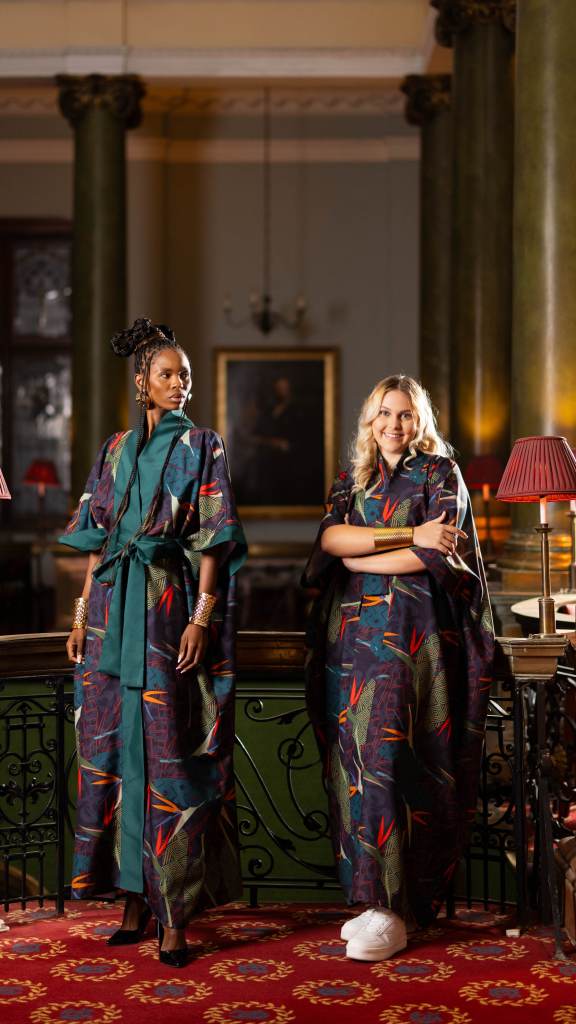
In a pioneering move that bridges fashion and finance, Nedbank has teamed up with celebrated South African designer Palesa Mokubung to bring us something truly unique: the first-ever fashion line inspired by a bank account. Yes, you read that right! This exclusive collection, titled ‘Now More People Can Premium’ by Mantsho x Nedbank MiGoals Premium, invites more South Africans to enjoy the luxury of premium fashion and lifestyle without the hefty price tag traditionally associated with it.
This collaboration is a bold statement that speaks to the heart of what Nedbank and Mantsho stand for—accessibility, cultural pride, and innovation. For years, luxury has been a realm for the few, but with this collection, Nedbank and Mantsho are redefining what it means to live a premium lifestyle. By making high-end, sophisticated African designs more accessible, the partnership is empowering people to step into their best selves, wrapped in the beauty of African craftsmanship and cultural pride.
A Collection with Cultural Significance
The name Mantsho, meaning ‘Black is Beautiful’ in Sesotho, has long been a testament to the vibrancy and resilience of African womanhood. Palesa Mokubung’s designs are bold, confident, and unapologetically African, carrying a story and a heritage in every piece. With this collection, she once again celebrates African style, blending it with a modern twist that speaks to the contemporary, ambitious African.
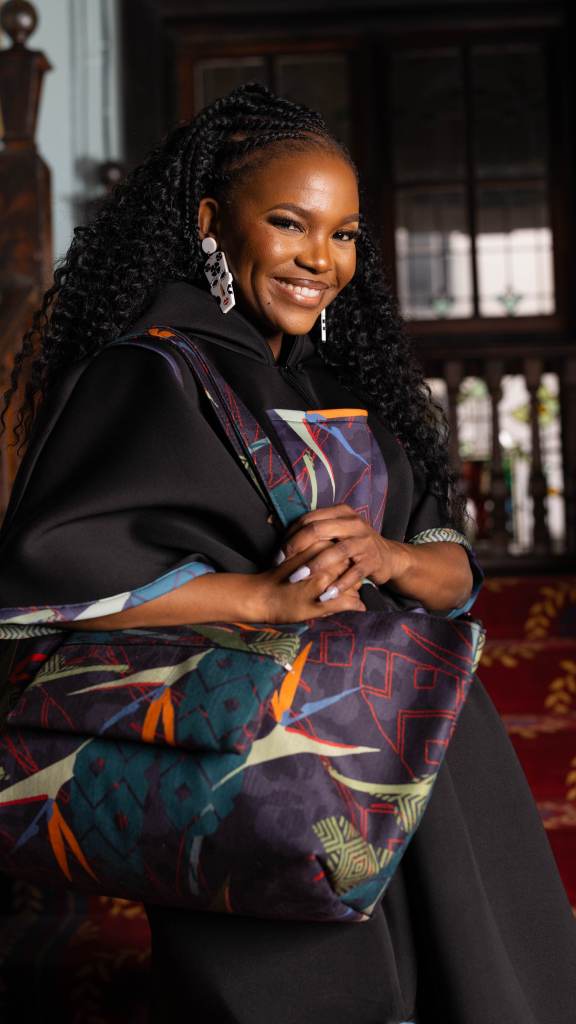
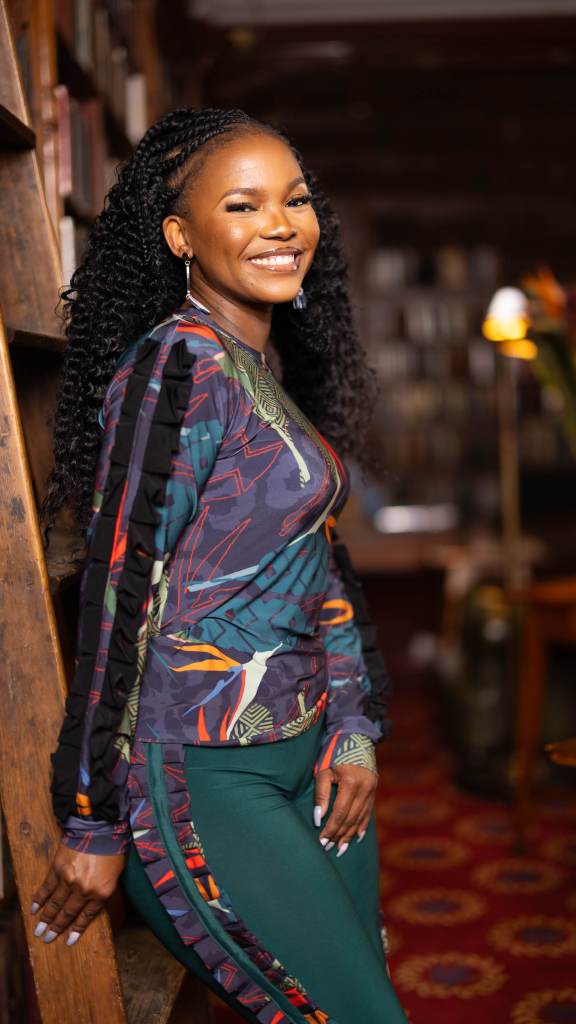
From locally sourced fabrics to meticulously crafted kimonos, T-shirts, and accessories, each piece in this nine-item collection is an invitation to embrace an authentic African look that’s both premium and accessible. Designed with the premium MiGoals account holder in mind, the collection doesn’t just offer clothes—it offers a lifestyle that resonates with elegance, ambition, and cultural pride.
Why This Collaboration Matters
In an era where brand partnerships are often superficial, the Mantsho x Nedbank collaboration stands out as a genuine synergy. Both brands are rooted in their commitment to giving back to the community, making a meaningful impact, and celebrating African excellence. By allowing a broader audience to access high fashion at an affordable price, Nedbank and Mantsho are championing inclusivity and the idea that a premium lifestyle doesn’t have to be reserved for the elite.
Nedbank’s Executive Head of Marketing for Retail and Business Banking, Buli Ndlovu, shared her excitement about the collaboration: “The Mantsho partnership is incredibly exciting for us. A lot of people weren’t able to access these iconic pieces before, but inspired by our MiGoals Premium Account, we’ve created a fashion line that brings premium access to more people.”
A Celebration of African Ingenuity
In a rapidly evolving global landscape, unconventional partnerships like the Mantsho x Nedbank collaboration are crucial for showcasing the richness and versatility of African creativity. These alliances not only amplify the voices of talented designers but also create opportunities for innovation and cultural exchange that transcend traditional boundaries. For young African creatives, such partnerships serve as a powerful lesson in the importance of collaboration and resourcefulness. By working together across industries, they can break down barriers, foster new ideas, and inspire a wave of creativity that reflects the dynamic spirit of the continent. This approach not only elevates individual brands but also positions Africa as a vibrant hub of artistic expression, encouraging a new generation to embrace their heritage while boldly pushing the limits of what is possible.
More Than Fashion, It’s a Movement
The Mantsho x Nedbank MiGoals Premium collection will be exclusively available on the Avo SuperShop, Nedbank’s curated platform offering everything from groceries to fashion. For those with a MiGoals Premium account, there’s an even sweeter deal—a 30% discount on all pieces in the collection, making it a perfect blend of style and savings. This hyper-personalised shopping experience aligns with the collection’s vision: luxury that’s attainable, meaningful, and, most importantly, African.
By creating a collection that’s affordable, Mantsho and Nedbank are opening doors for a new audience, one that values quality, identity, and affordability. As Ndlovu puts it, “We’re bringing a premium brand much closer to a wider audience, and we’re thrilled about it. This partnership feels like a natural fit, with both brands sharing a commitment to meaningful, creative impact.”
This collection is more than just clothes—it’s a symbol of African pride, creativity, and resilience. As South African fashion continues to redefine the boundaries of creativity, Mantsho x Nedbank stands as a testament to what’s possible when African brands come together to push the envelope. With a touch of elegance and a dash of vibrancy, ‘Now More People Can Premium’ by Mantsho x Nedbank MiGoals Premium is here to empower a new generation of Africans to own a piece of premium lifestyle, without compromising their roots or their wallets.
For more information on how you can join this movement, visit the link here
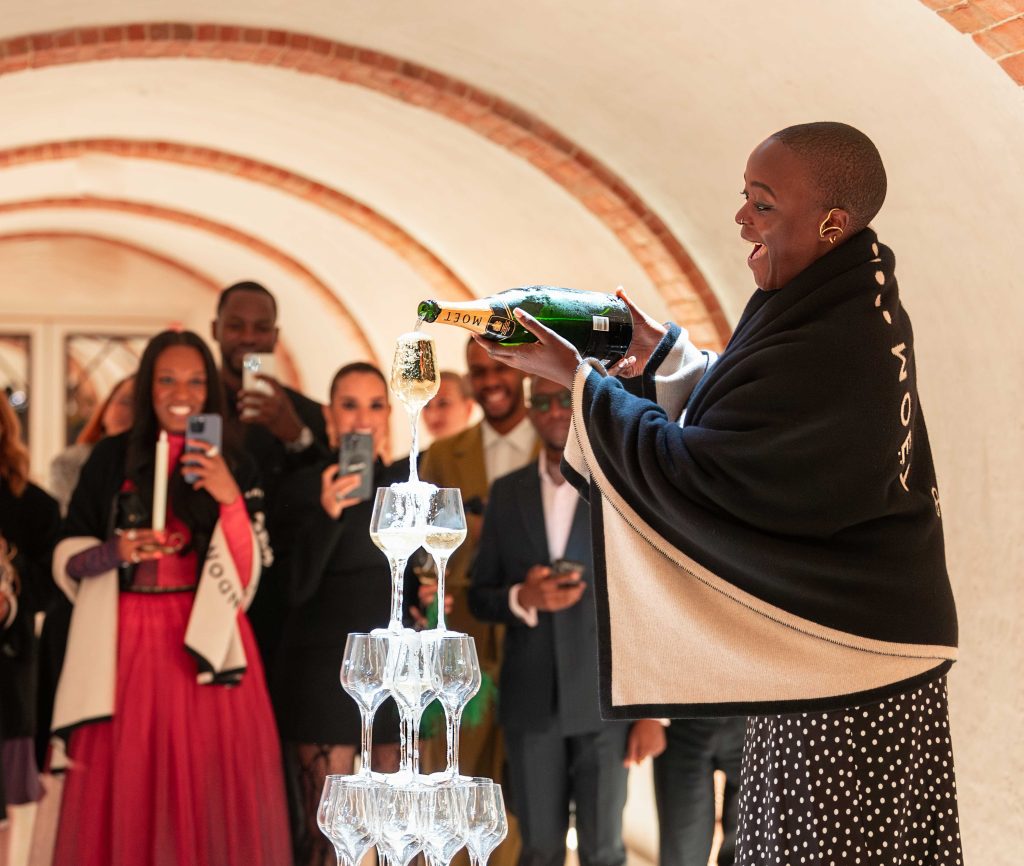
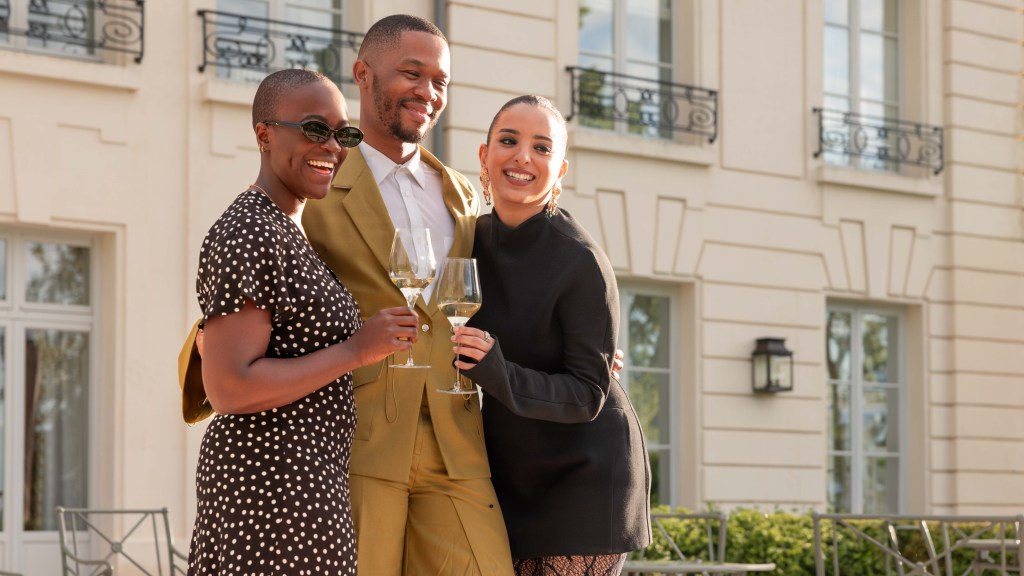
In the heart of Épernay, where the legacy of Moët & Chandon has flourished for centuries, the iconic Champagne house played host to a unique celebration for Champagne Day 2024. This year, Moët & Chandon invited seven of Africa’s most prominent creative talents for a cross-cultural exchange that highlighted the brand’s enduring commitment to craftsmanship, artistry, and heritage.
Lyra Aoko trying her hand at the Champagne pyramid
The star-studded guest list included South African designer and LVMH Prize winner Thebe Magugu, Nigerian textile artist Banke Kuku, Ghanaian fashion designer Aisha Ayensu, and others from across the continent, all representing a diverse range of disciplines, from fashion to photography. These seven artisans were invited to experience Moët & Chandon’s deep-rooted savoir-faire, taking inspiration from the centuries-old process that defines the world-renowned Champagne.
Aisha Ayensu exploring the cellars
For Mahine Sef, a Cameroonian music producer and photographer, the visit to Moët & Chandon was nothing short of magical. “My first impression of Épernay was one of timeless elegance,” he remarked. “The estate felt like a place where tradition and innovation harmonise beautifully.” This theme of merging old and new was a key thread throughout the visit, as the artisans explored the historic cellars and discussed the parallels between their own crafts and the meticulous art of Champagne making.
Thebe Magugu, who has risen to global prominence in fashion, was equally in awe of the legacy of Moët & Chandon. “It blows my mind that they have managed to preserve a brand since 1743, and for it to still be even more relevant in 2024,” he said, reflecting on how craftsmanship and innovation can stand the test of time.
Banke Kuku, the creative genius behind her eponymous Nigerian boutique, was moved by the serene beauty of the Moët & Chandon estate. “It’s like the world slowed down once I stepped into the estate,” she shared. For her, the experience was both reflective and inspiring, emphasising the importance of asking ‘why’ throughout the creative process.
The cultural exchange between African and French artisanship was a key focus, with the trip offering an opportunity to explore how these two rich traditions can influence and inspire one another. As Moroccan jewellery designer Youssra Nichane observed, “The Memories of Tomorrow exhibition, showcasing artisan embroidery, was a true reflection of where craftsmanship meets history.” The exhibition resonated deeply with her, inspiring her to create new designs that blend Moroccan heritage with Moët & Chandon’s artistry.
Beyond the Champagne and the cellars, this trip was about much more than luxury. It was about the shared values of tradition, community, and excellence—values that transcend borders and bring artisans together. As Tanzanian designer Mtani Nyamakababi put it, “Their strategy has been carefully crafted over centuries to maintain their status as one of the world’s most prestigious Champagne brands. This inspired me to be more committed to excellence in my craft.”
As Champagne Day approaches, Moët & Chandon continues to showcase the powerful connections between African creativity and French tradition, celebrating the endless possibilities that arise when cultures come together. This event was not just a tribute to Champagne, but to the artisans who continue to break boundaries, craft by craft, one toast at a time.
7 Artisans at the Orangerie lawns
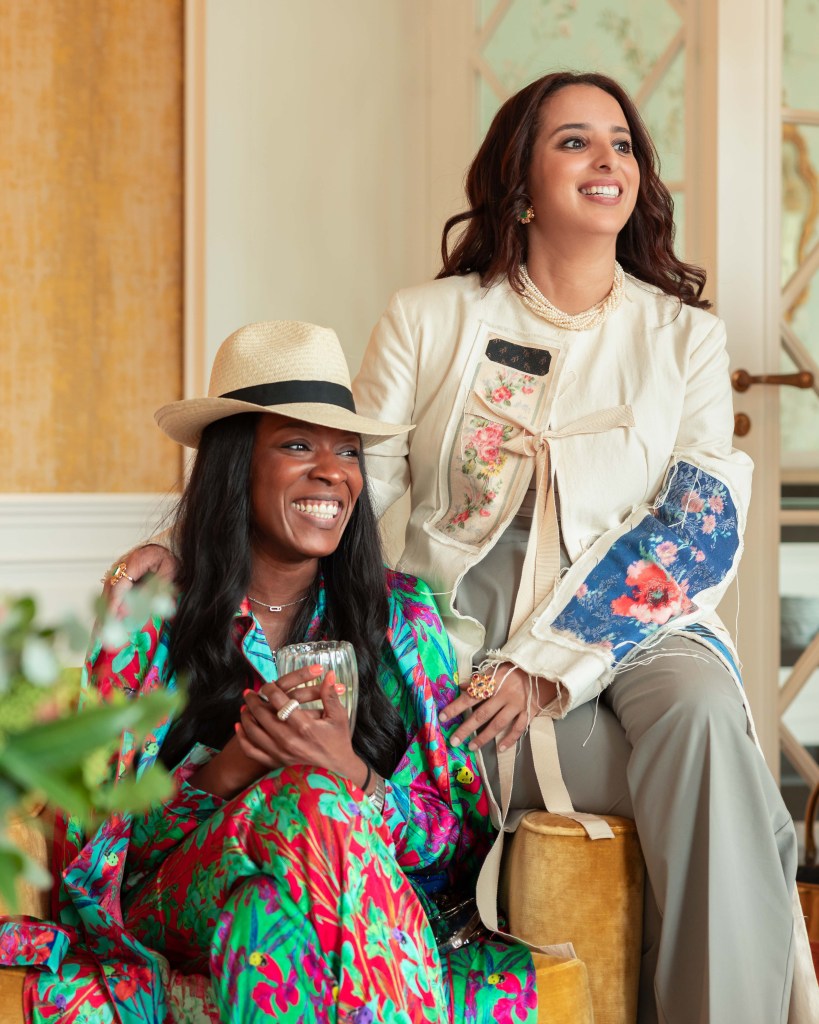
Lyra Aoko Thebe Magugu and Youssra Nichane connecting at the Chateau de Saran
Banke Kuku and Youssra Nichane enjoying a glass of Moet Brut Imperial
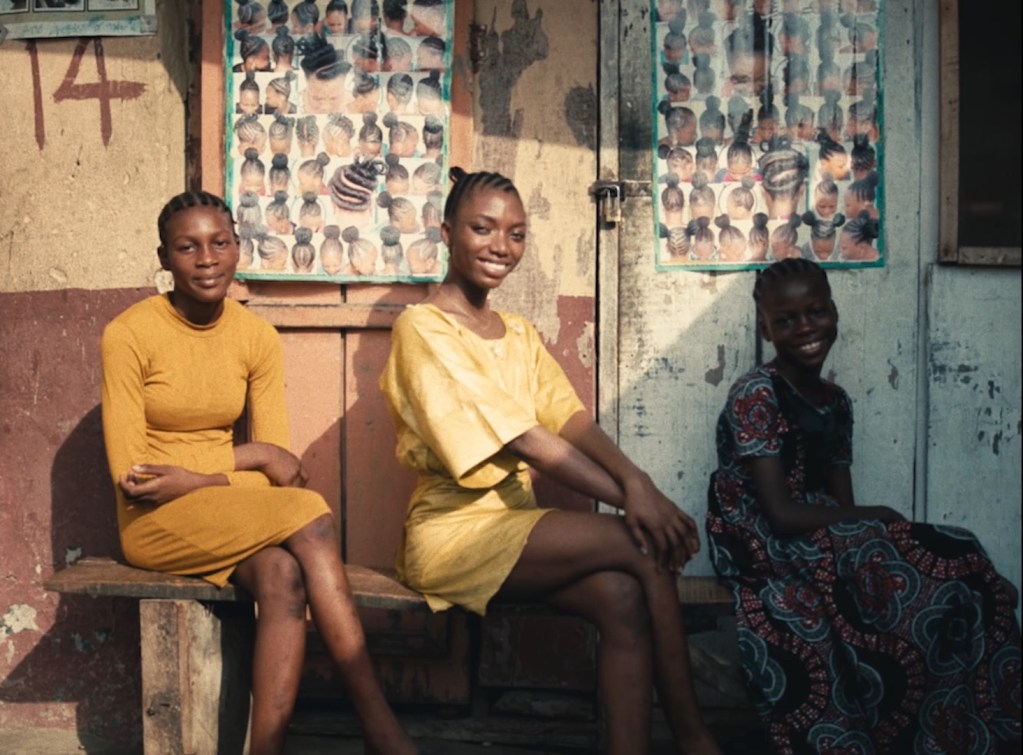
Olawunmi Hassan and Adaobi Samson, film directors from Lagos, Nigeria, are celebrating winning the non-fiction category at the Sony Future Filmmaker Awards 2024 with their short film, Ìrún Dídì. Their first documentary and first win in a contest of this nature, the film showcases the art of Yoruba hairmaking and the talented stylists behind it. “This experience has been incredibly meaningful. It has made me realise there is so much more to achieve beyond what I can comprehend. It has also shown me that my wild and ambitious dreams are achievable. This experience has increased my trust in myself and my vision, and I now have more confidence in my ideas,” says Olawunmi.
Adaobi believes winning this award validates her work. “Competing against thousands and emerging victorious was unexpected, to be honest. Most importantly, it means I directed a film that resonated with and was loved by the world, which felt incredible,” she says.
The pair met while interning at Pinkline Films two years after they started making films in 2020. They teamed up in the first half of 2023 to create their Awards entry, focusing on their unique filmmaking style and shared love for African art.
Six categories (Fiction, Non-Fiction, Environment, Animation, Student, and Future Format) meant there could be only six winners. Ìrún Dídì was selected from over 8,400 films submitted by more than 5,000 filmmakers across 148 countries and territories.
Hassan and Samson and their fellow winners Katie Blair (USA, Fiction), Solmund MacPherson (Canada, Environment), Kyle Novak (Czech Republic, Animation), Raheem Razak (South Africa, Student), and Cristian Daniel (Uruguay, Future Format) were drawn from 30 shortlisted filmmakers, whittled down from a longlist by celebrated Australian filmmaker Unjoo Moon and Emmy-award winning cinematographer Robert Primes ASC. Ultimately, the final awards were made by Michael Barker and Tom Bernard, Co-Founders and Co-Presidents of Sony Pictures Classics (Call Me By Your Name, The Father, Whiplash); Rob Hardy ASC, BSC, BAFTA award-winning cinematographer (Civil War, Mission: Impossible – Fallout, Ex-Machina); and Kate Reid BSC, acclaimed British cinematographer (Game of Thrones, Great Expectations, Silo). Both stages of the judging process were chaired by award-winning director Justin Chadwick (Mandela: Long Walk to Freedom, The Other Boleyn Girl, Tulip Fever, Shardlake).
Established by Creo and sponsored by Sony, the Sony Future Filmmaker Awards is a major annual awards programme for short films. It was conceptualised to provide a gateway for the development of exceptional cinematic talent, and it champions filmmakers with an original perspective on storytelling. This was the second edition of the awards, and winning a category is a significant achievement in the film industry.
The Sony Future Filmmaker Awards jury said: “This year’s winners traverse borders and cultures, a global gathering of creative talent set to make their mark in our industry. The winners each approach their stories with originality; from a portent of an eroding society to a surreal take on family pressures [and] an animated love story suspended in time: we were struck by the ingenuity of these filmmakers and their fresh perspective on the world. It is with great pleasure we celebrate the winners, as well as the wider cohort of 30 filmmakers who comprised this year’s shortlist, and we look forward to watching as they take their next steps in cinema.”
The Non-Fiction category awards short films that are predominantly factual in content. This can include archive and documentary footage, reenactments and animation. The category winner receives a Sony camera and lens kit and US$5,000.
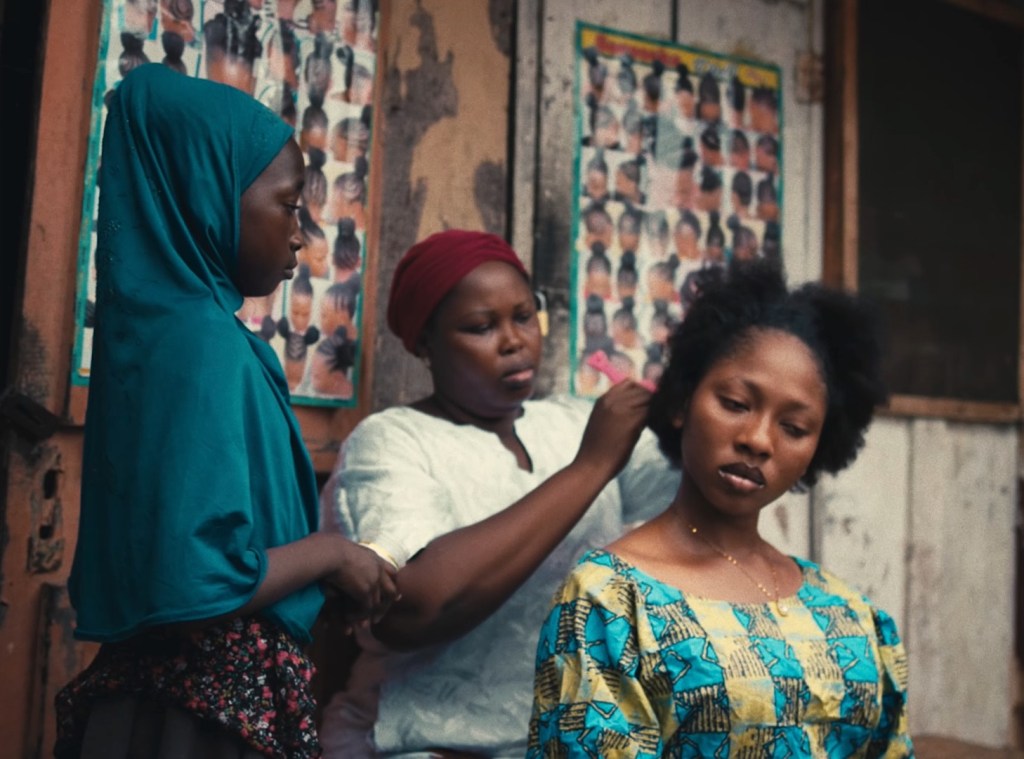
Ìrún Dídì presents hair plaiting as a profoundly expressive art form, where each braid is crafted with care and creativity. The film explores the link between hair plaiting and self-love, revealing each style’s personal stories, social significance, and ancestral connections. It highlights how this craft has been passed down through generations, preserving cultural heritage. From traditional Yoruba techniques to modern interpretations, Ìrún Dídì traces the evolution of this timeless art as it becomes a sacred ritual of self-care and empowerment.
Olawunmi’s personal experiences as an African woman inspired the topic for this film. “It’s a lived experience of mine. Making these hairstyles as a child and admiring myself afterward was a huge inspiration. As I portrayed in the film, these hairstyles make me feel beautiful. As an African woman, it felt like the perfect topic for my first documentary.”
For Adaobi, this type of hairstyling was a significant part of her childhood. “I think every young girl in Africa has had those styles at some point in their lives. Back then, it was the highlight of hair care and beautification. When Olawunmi first approached me with the idea, I knew it was a story close to my heart. I had always wanted to explore tales of African art in a way that was personal to my own experiences.”
Collaboration was their most significant learning on this project. Olawunmi says she usually prefers taking the lead when executing her vision because she feels she’s the only one who understands it perfectly. “However, working with Adaobi taught me to trust my team and embrace the power of flexibility,” she says.
Despite a sense of familiarity from knowing each other before beginning the project, Adaobi says collaborating with Olawunmi “was quite interesting. She is deeply passionate about her work and on set you’ll see that she’s direct and highly skilled in expressing her thoughts. During post-production, we had our doubts about the project, but she consistently helped in finding solutions and ensured it came to fruition. The experience made each of us more assertive and reliable as we went through the whole thing together. It was really a fun project overall, and we didn’t expect anything significant to come from it.”
Olawunmi hopes that their film will enable non-African viewers to learn more about Yoruba culture and that African viewers will find relatable moments in it. She says, “A key part of the story is acknowledging that many African cultures share similar values.”
For Adaobi, relatability was vital. “I wanted viewers to watch the film and feel as if they were seeing a part of their own lives that they hadn’t fully understood before,” she says.
The Sony Future Filmmakers Awards return for a third edition in Spring 2025, and submissions are now open until 12 December 2024.
Photo credits: Olawunmi Hassan and Adaobi Samson, Nigeria, Ìrún Dídì, Winner, Non-Fiction, Sony Future Filmmaker Awards 2024
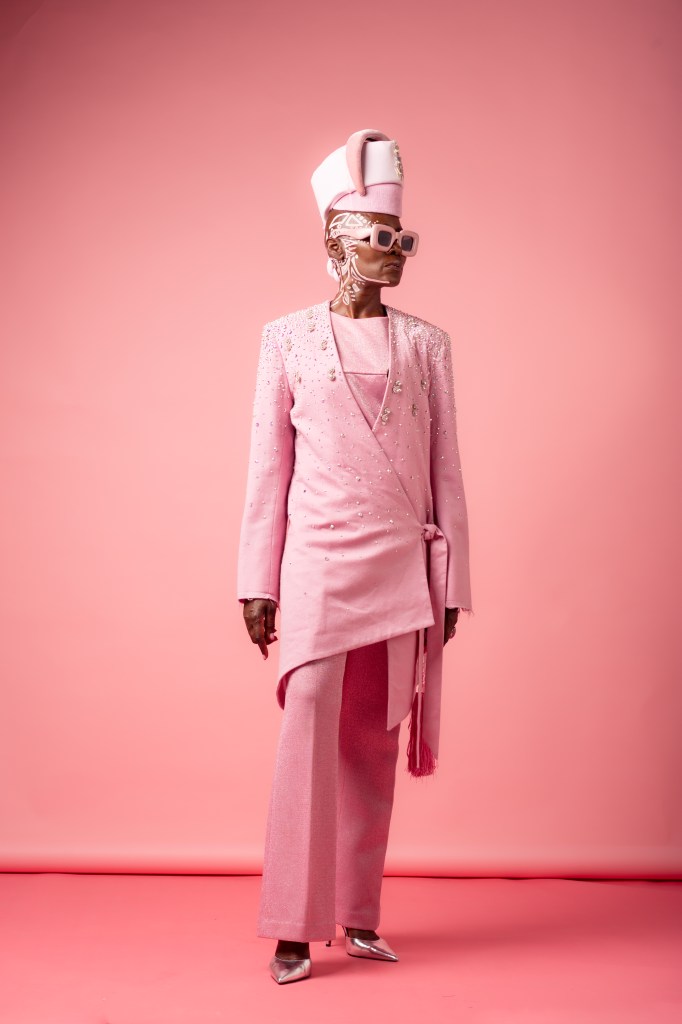
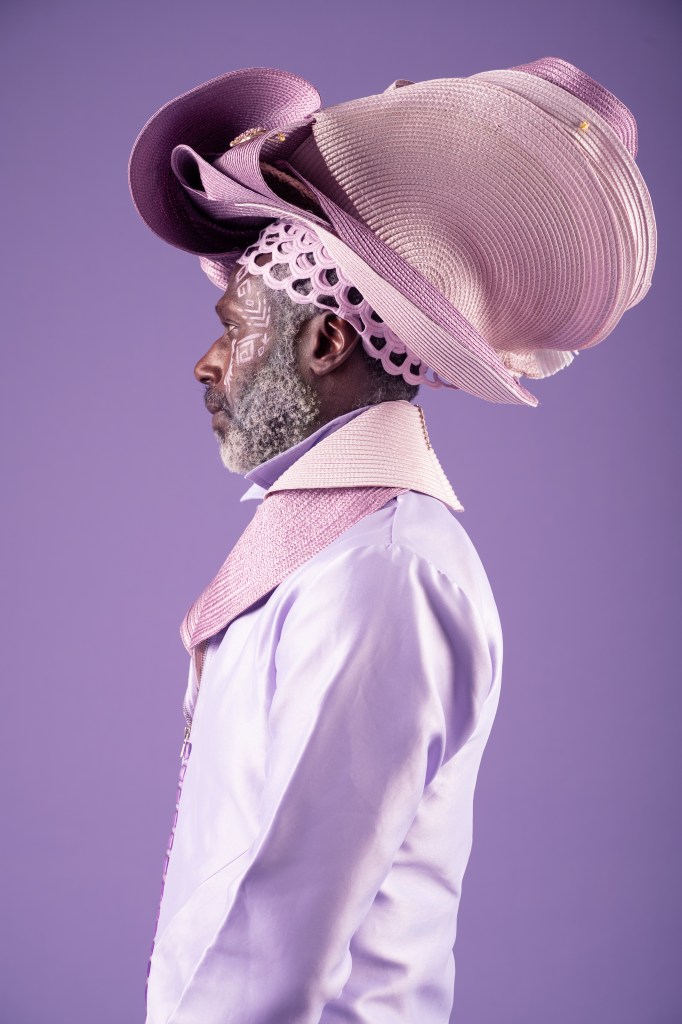
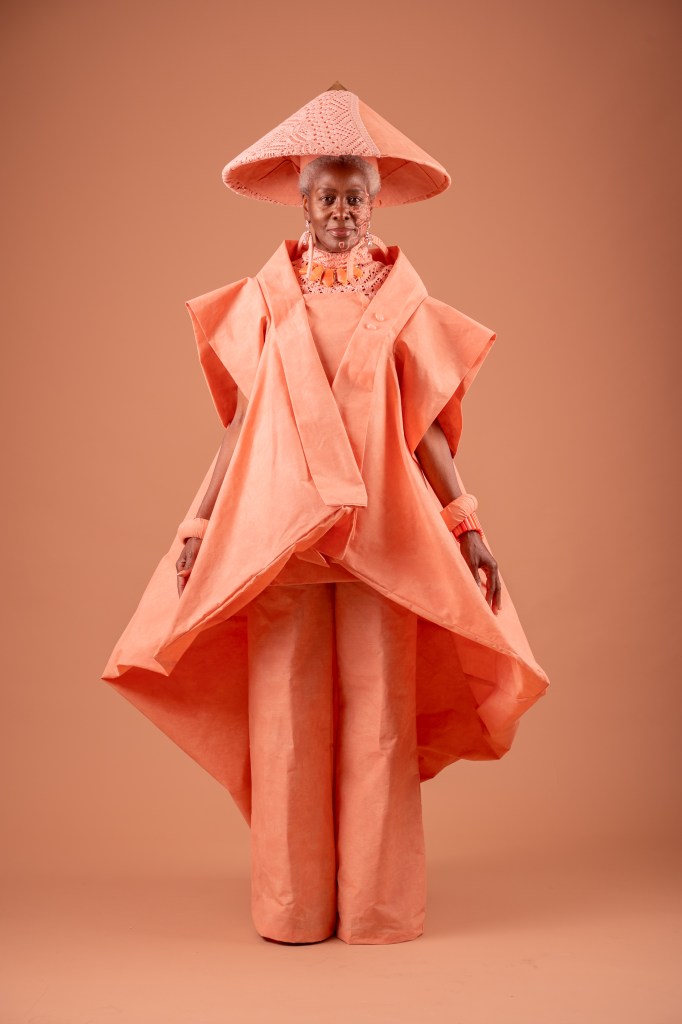
In the world of fashion and media, representation remains a critical issue, especially for more mature, darker-skinned individuals who are often overlooked. This disparity served as the inspiration behind “Sentinels in Pastel,” a unique and visionary project that merges surrealism with realism to showcase the beauty and power of older Black models based in London.
Artificial Intelligence (AI) has often been the go-to source for envisioning mature, dark-skinned models due to the lack of real-world representation. “Sentinels in Pastel” seeks to disrupt this trend by spotlighting real people, thus bridging the gap between fantasy and reality.
We embarked on this project with a mission to highlight real individuals, crafting a fantastical narrative that features models older than the industry standard. Crafted and styled by the talented Julius Reuben, the photoshoot incorporated childlike objects as a juxtaposition to the models’ maturity. This contrast, using pastel colours typically associated with babies, created a striking visual dialogue between youth and age, emphasising common ground despite the age difference.
In many African, Afro-Caribbean, and diasporic households, the mature generation holds a place of deep respect and love. They are seen as powerful sentinels, guardians of wisdom and tradition. “Sentinels in Pastel” challenges the media’s general disregard for the older generation by celebrating their strength and influence.
The models featured in this project challenge the prevailing media narrative that often ignores the mature generation. Through my lens, these individuals are not just models but embodiments of resilience and grace, reflecting the richness of their lived experiences.
Getting to know each model personally was a crucial part of this journey. Their strengths, personalities, and vibrant energy deeply influenced the personas they portrayed in the shoot. This personal connection allowed us to create more authentic and powerful representations.
Each model’s persona was enhanced with facial tribal painting and symbolism, expertly executed by Keisha Desvignes. This artistic choice not only highlighted their individuality but also immersed them in an Afrofuturistic narrative, bridging cultural heritage with contemporary expression.
We also utilised backgrounds that matched the colours of the garments worn by the models. This choice was culturally significant, as it symbolised harmony and unity, reflecting the seamless blend of the models’ identities with the Afrofuturistic vision. It emphasised the idea that the models were not just wearing the clothes but embodying a cohesive cultural and aesthetic narrative.
As a British African photographer shooting Afrofuturism globally, this project holds a special place in my heart. It presents a vision of the future where the richness of African heritage is celebrated, and older generations are given the spotlight they deserve.
“Sentinels in Pastel” is not just a fashion project; it’s a cultural statement. It speaks to the African diaspora’s experience, blending traditional respect for elders with a futuristic vision that challenges contemporary norms. It invites viewers to reconsider their perceptions of age, beauty, and cultural significance.
From a diaspora viewpoint, this project is a reminder of the strength and resilience that older generations embody. It underscores the importance of representation in all its forms, advocating for a more inclusive and diverse portrayal in media and fashion.
Ultimately, “Sentinels in Pastel” is a call for inclusivity. It urges the fashion industry and media to recognise and celebrate the beauty and power of older, darker-skinned individuals. By doing so, we can create a more representative and equitable world that honours all ages and backgrounds.
“Sentinels in Pastel” stands as a testament to the enduring strength and grace of the mature Black community. It’s a vibrant, Afrofuturistic homage to those who have paved the way, reminding us all of the importance of inclusivity and representation in every realm of society.
Meet the Sentinels:
Gloria: Adorned in peach, exuding timeless elegance.
Fernando: Draped in lilac, embodying serene strength.
Antony: Clad in mint, representing fresh perspectives.
Yinka: Wrapped in pink, showcasing vibrant vitality.
Jaqueline: In yellow, illuminating wisdom and joy.
Sharing these practices creates a sense of connection and support, helping women feel less alone in their journey towards recovery.
We explore the intersection between culture and beauty in postpartum practices throughout the continent, examining their significance in promoting wellness, celebrating womanhood, strengthening the fabric of the community and helping new mothers regain their beauty.
Physical restoration through tradition
African postpartum practices are deeply rooted in tradition, spirituality and the healing power of nature. Each region, from the shores of West Africa to the plains of East Africa, has unique customs and ceremonies that celebrate the beauty of motherhood.
Women across the continent perform rituals that recognise the journey of childbirth and promote physical, emotional and spiritual wellbeing.
Hot water towel compress (various regions)
In various African cultures, a common practice to soothe the lower abdomen and promote healing after childbirth during the immediate postpartum period is using hot water towel compresses.
This traditional method involves dipping warm towels in hot water infused with herbs such as chamomile or lavender and placing them gently on the belly. The herbs used in the hot water are believed to have calming and anti-inflammatory properties that are particularly beneficial for new mothers who have just given birth.
Hot water towel compresses can help reduce swelling, alleviate cramps and stimulate circulation in the abdominal area, providing comfort and relief. This practice is widely considered a safe, natural and effective way to promote healing after childbirth and supporting overall wellbeing.
Stepping into Mukuni Village in Zambia a few weeks ago felt like returning home. There, I encountered the women of the Booma Women Cooperative, whose presence rekindled memories of my beloved grandmothers.
My grandmothers were two of the most extraordinary women I’ve known. They epitomised everything I aspire to be in my late 20s – brimming with vitality, loving deeply and radiating wisdom.
Each moment I spent at the cooperative was infinitely precious – the red earth underfoot, the laughter echoing and the radiant smiles filled me with joy; children perched on their mothers’ backs created a scene of communal love and laughter.
A poignant African saying goes: “A home without elders is like a well without water.” Nowhere did this resonate more profoundly than in Mukuni. The work these women do is a testament to the enduring strength and essential nature of our elders in shaping a rich and vibrant home.
The concept of ‘origins’ (our magazine’s theme) evokes the foundational root from which all life springs. It is a journey back to the ancient roots that have nurtured contemporary identities, intertwining the richness of past civilisations and indigenous wisdom. This exploration forms the core mission of the Booma Women’s Cooperative.
Photo credit: Mwawa Silupumbwe
Booma Women’s Cooperative
Founded by Kamila Hejlikova in 2023, the cooperative presents a stirring narrative of Zambia – a proud tale where tradition harmonises with the abundance of nature. The women are the custodians of Mukuni’s Wild Oils, a brand steeped in local tradition.
These oils, harvested from the local forests, are crafted into pure, beneficial products used for cooking and body care, all while embodying the spirit of sustainable practice.
My role is clear: to spotlight this female-led enterprise that is pivotal in conserving natural resources through its commitment to traditional agricultural methods. Through their hands, the ancient wisdom of land and heritage is not only preserved but is also celebrated in every drop of Mukuni’s Wild Oils. This is more than business, it’s a heartfelt tribute to the spirit of Africa’s women and their unyielding dedication to the land that cradles us all.