All print versions of Fifty Four now available digitally Explore the Digital Library →
Culture

What Happens to the Men Who Don’t Cry

Pexels Emir Bozkurt
Pexels Emir Bozkurt

A compassionate but firm call to dismantle the “strong black man” script equating tears with weakness and silence with strength

pexels Elo
Pexels Kaybee Photography

“A man who can cry is not a risk to the family but its best chance of survival.”

In a hospital corridor in Blantyre, a man sits with his head in his hands after his father dies. The women in the family move around him: calling relatives, arranging the funeral, and wiping tears allowed to fall. He, however, doesn’t cry. He’s the eldest son, with forms to sign, money to find, and a casket to choose. Later, in the taxi home, he stares out the window at the red dust and says nothing – this silence not strength but training.

Across much of the continent, boys are taught a simple equation: tears equal weakness, weakness equals danger.

The lesson is learned early on. A boy falls and is told to stand up like a man. Hurt, he’s told pain is private. Afraid, he’s told fear must be hidden or will otherwise be used against him. By the time he’s an adult, the machinery is complete. He can carry a family, a business, a funeral, and a nation; yet he can’t carry his own grief.

Pexels Kaybee Photography
Pexels RDNE Stock project

This isn’t culture in the truest sense but a survival strategy hardened into identity. Colonial economies needed bodies that could endure without breaking. Postcolonial states inherited that same demand and dressed it in new uniforms: the soldier, the worker, the head of household. Literature from the 1990s caught this truth in the act. Gordimer, for example, wrote about the private lives of people under public pressure and how apartheid and the aftermath turned intimacy into a battlefield. Soyinka reminded readers that freedom isn’t inherited but practised, often at great cost, with men assigned a particular role: to hold the line even if it means holding their breath.

The cost shows up in many ways. In some homes, it appears as anger that arrives too quickly: a fist on the table, door slammed, or silence lasting for days. In others, it’s alcohol, work that never ends, or emotional absence that feels like a second death. In many places, it’s tragically suicide – a word still whispered as if a scandal not a symptom. The men who do not cry do not vanish; they become hard and dangerous to themselves and those who love them.

PEXELS Laker
PEXELS cottonbro studio

Dangarembga’s Nervous Conditions is often read as a story about girls, but it’s also a story about what happens to boys facing the same pressures. The men in her pages aren’t villains; they’re wounded, carrying expectations leaving no room for softness. Writing in post-apartheid South Africa, Zakes Mda showed how violence and grief circulate in communities where mourning has no safe container. The men in his novels aren’t monsters; they’re people who were never taught how to tremble.

There’s another way, though, beginning with a single permission: that a man can cry without ceasing to be a man. Not an import from somewhere else, it’s a return to older truths many families still remember. In some places, men wail at funerals. In others, they sit together and talk until dawn or pray in voices that break. These are not signs of collapse but rather signs of life.

The work is not theatrical, not requiring a man to perform his pain for an audience. It simply requires a shift in the household, the church, the workplace, the friendship. It looks like a father telling his son it’s okay to be afraid, a wife saying “There’s no need to carry this alone,” and a friend sitting with another man in silence. Not punishment, it’s companionship. A community shouldn’t gossip when a man goes to therapy but instead ask how it’s helping.

pexels SULTAN
PEXELS Dapo Abideen

This doesn’t mean abandoning responsibility but simply redefining strength. A man who can name his grief is less likely to drown in it; he who can ask for help is less likely to break in ways harming everyone around him. A man who can cry is not a risk to the family but its best chance of survival.

Soyinka wrote that freedom is not inherited. The same is true of tenderness, which must be practised in small, unglamorous ways until it becomes ordinary. In a house in Gaborone, a man cries at his mother’s funeral, and his brother puts a hand on his shoulder. In a flat in Nairobi, a husband tells his wife he isn’t fine, and she doesn’t try to fix him. In a village outside Mbandaka, a group of men sit under a tree and speak about the things they’ve lost without jokes, solutions, or shame.

What happens to the men who don’t cry? They become monuments, warnings, and the stories families tell in hushed voices about what happens when pain has nowhere to go. The alternative? Not softness for its own sake but a different kind of strength, one that can hold both a child and grief, a future and memory, and a nation and trembling heart.

Image citations:

pexels Emir Bozkurt | pexels Elo | pexels Kaybee Photography | pexels Kaybee Photography | pexels RDNE Stock project | pexels Laker | pexels cottonbro studio | pexels SULTAN | pexels Dapo Abideen

Culture

The Names We Carry Across Water

Instagram Vintageafricanwomen

How colonial naming practices, assimilation, and convenience killed many African names and why a new generation is reclaiming them

Facebook AFRICAN HISTORY GROUP
GLASGLOW AFRICAN TALES

“To change such a name is not simply to alter a label but to reconfigure one’s relation to lineage and place.”

For Africans in the diaspora, names are often the first site at which belonging is negotiated. A name that once moved effortlessly within a local linguistic ecology is recast in transnational space as excess: too long, too tonal, too marked by history, too resistant to easy pronunciation. What appears to host societies as a matter of convenience is in fact a struggle over recollection, legitimacy, and self-definition. The pressure to abbreviate, anglicise, or replace an African name, likewise, reveals how colonial habits persist in everyday interactions long after formal colonialism ends.

Southern Africa offers a particularly instructive context for this problem where colonial and missionary regimes didn’t simply impose foreign rule but reorganised systems of naming. Mission schools encouraged Christian baptismal names just as administrative systems required names that could be filed, standardised, and made legible to bureaucratic power. Such pressures intensified under apartheid, with passbooks, identity documents, and official records demanding forms of identification aligned with state surveillance rather than cultural continuity. The result? Not merely a linguistic shift but an epistemic one, the social meaning of a name displaced by its administrative utility.

Instagram westafricancommunity
tiktok SASHA ZOMOT

Names are rarely arbitrary within African naming systems, however, often encoding clan affiliation, historical circumstance, ancestral continuity, ethical aspiration, or commemorative remembrance. In many Southern African communities, a name may register a family’s mood at the moment of birth, a political condition, a blessing, or even a proverb condensed into a single lexical form. To change such a name is not simply to alter a label but to reconfigure one’s relation to lineage and place; this is why naming in the diaspora cannot be understood only via assimilation theory and must also be read through cultural relevance.

pexels DΛVΞ GΛRCIΛ
pexels Sasha Kim

Placing subjects in environments where identity is repeatedly translated, the contemporary African diaspora intensifies these same dynamics. With immigration documents, school registers, workplace databases, and digital platforms all creating pressures toward standardisation, individuals may develop a double naming practice: one name for official circulation and another for intimate or familial use. This split can become normalised over time despite being psychologically costly. The diaspora subject thus learns to inhabit a divided onomastic life, the name spoken at home and the one used in public not entirely coinciding.

pexels Fennah Chereka
pexels Alfred Dena

We shouldn’t interpret this division only as loss, though. Recent scholarship on diaspora naming practices shows many African migrants actively use naming as a continuity strategy, giving children indigenous names, preserving clan names, or combining African and English names in ways signalling both attachment to home and a means to navigate the host society. In this sense, naming becomes a mode of diasporic agency allowing subjects to stay connected to an inherited moral world while also making room for cross-cultural mobility. The practice, overall, is best understood not as resistance in a purely oppositional sense but as negotiation: a calibrated attempt to remain legible in multiple worlds without surrendering the one making the self intelligible in the first place.

Image citations:

Instagram Vintageafricanwomen | Facebook AFRICAN HISTORY GROUP | GLASGLOW AFRICAN TALES | Instagram westafricancommunity | tiktok SASHA ZOMOT | pexels DΛVΞ GΛRCIΛ | pexels Sasha Kim | pexels Fennah Chereka | pexels Alfred Dena

Culture

The Rest We Steal

pexels David Kwewum
pexels David Kwewum

An intimate meditation on what “rest” really looks like (or doesn’t) in African homes between shift work, side hustles, family duties, and the guilt of slowing down

pexels LekePOV
pexels Ekua Apau

“Rest, in this telling, isn’t a luxury. It should be a practice and the space where people remember they’re more than what they produce.”

In a flat above a spaza in Mbabane, the lights go out at 10:13 pm. A paraffin stove clicks. A child sleeps on a mattress on the floor, one leg draped over a schoolbag. As in so many others, rest isn’t a right in this house but something stolen in the margins between obligations that don’t end when the body is tired.

Across much of the continent, equating rest with laziness is older than any single family: having arrived with histories teaching people they must be useful to live. Colonial economies didn’t need Africans to rest; they needed them to labour, carry, mine, harvest, and clean, for others more than themselves. This logic didn’t disappear when flags changed. It settled into kitchens and how questions are asked: What have you done today? What are you becoming? Why are you always on the phone? The latter is often the only place where rest hides, a small rebellion of doom-scrolling while the dishes nearby are still wet.

pexels Tima Miroshnichenko
pexels Zeal Creative Studios

The result? A kind of exhaustion that doesn’t show up in medical tests but in how a laugh ends too quickly, in how people say “I’m fine” when they’re really not, and in how Sundays feel like another shift with different clothes. In some homes, such exhaustion is worn as a badge: I’m the one who does everything. It’s a secret shame in others, a fear that if you stop, you’ll be exposed as not enough. Or maybe things just won’t get done.

Yet rest is also where resistance begins. Ngũgĩ asked us to consider what language remembers. The languages of this continent remember other patterns: the afternoon pause when the sun is too sharp, the storytelling that happens after the work is done, and the long meals not about productivity but rather belonging. In some places, these flows of life survive in fragments. In others? They’re being rebuilt by people who refuse to treat their own bodies as machines.

pexels Skylight Views
pexels Mukula Igavinchi

Perhaps the most radical thing an African household can do is to stop apologising for tiredness: to say, plainly, that the children aren’t available every evening, the adult won’t answer every call, and the family gathering will end at a reasonable hour. This is not Western individualism imported by influencers but an old truth returning; people aren’t resources to use up but rather ancestors in the making.

Gordimer wrote about the politics of the everyday and how ordinary lives carry the weight of broader systems. The question of rest isn’t private in this light but perhaps also political, tasking us with asking what kind of future we’re building in these homes. Is everyone burning out beautifully? Or living long enough to see their own grandchildren and tell stories not about survival but instead something softer?

pexels Kold Shots
pexels cottonbro studio

Rest, in this telling, isn’t a luxury. It should be a practice and the space where people remember they’re more than what they produce – an action where the future is imagined without the noise of alerts and demands.

It’s where the continent’s tired children learn, slowly, that they are allowed to stay.
Image citations:

pexels David Kwewum | pexels LekePOV | pexels Ekua Apau | pexels Tima Miroshnichenko | pexels Zeal Creative Studios | pexels Skylight Views | pexels Mukula Igavinchi | pexels Kold Shots | pexels cottonbro studio

Culture

A Refusal to Be Unmade: The Garifuna Story of Survival and Return

The Garifuna of Central America inherited one of the most extraordinary journeys in the African diaspora, a story of war, exile, and survival written across two ocean crossings.

pexels Vinicius Silva
pexels Anchau

“The continuum, here, is not a metaphor. It is practice. It is discipline. It is a refusal, quiet and absolute, to be unmade.”

On the Caribbean coast of Honduras and in the town of Trujillo, the punta rhythm starts before dawn. Punta, a dance of hips and earth and ancestral address, isn’t performed for tourists but rather the dead, the living, and the enduring continuity between both. The dancers know where the rhythm comes from, familiar with its African roots, Arawakan re-shaping, and centuries of Caribbean transformation. They carry all of it consciously in how they move their bodies.

The Garifuna are an Afro-Indigenous people whose origins lie in a collision of worlds: the Kalinago people of St Vincent and the West African survivors of shipwrecks and escapees who reached the island from the 17th century onward. Over generations, these communities merged – genetically, linguistically, and culturally – into a people neither wholly African nor wholly Indigenous but something luminous and entirely new. Their language, Garifuna, is structurally Arawakan with deep West African lexical and phonological influence. Their music, food, and spiritual practices, meanwhile, carry both inheritances simultaneously without apology nor confusion.

pexels Oswald Yaw El-Saboath
pexels Mukhtar Shuaib Mukhtar
pexels Visuals event Olympus

In 1797 and having defeated the Garifuna in the Second Carib War, the British colonial government forcibly exiled approximately 2,500 survivors from St Vincent to the island of Roatán off the coast of Honduras. Hundreds died during the crossing. Those who did survive spread along the Central American coast into Honduras, Guatemala, Belize, and Nicaragua and built new communities from the wreckage of forced removal. This second crossing, following the Middle Passage that had brought their African ancestors to the Caribbean, became central to Garifuna identity: a second exile, second survival, and second root pressed into hostile ground.

The Garifuna have since spread further still with large communities in New York, Los Angeles, and London, each migration adding a new layer to an identity already deeply rich. In the Bronx, for example, you can attend a dügü: a multi-day ancestral ceremony calling for the physical presence of family members from across the diaspora and seeing relatives flying in from Belize, Honduras, and England to complete the rite. The ceremony, which cannot be performed by fewer than a community, is in itself a living map of where these people have gone and what they refuse to leave behind.

The candombe – a drumming tradition of Bantu origin, shared with Uruguay and brought to the Río de la Plata region by enslaved Congolese and Angolan people – never truly disappeared from Argentine cultural life. The practice was often attributed to Uruguayan influence, a convenient fiction that avoided acknowledging its Argentine-African roots. Today, Buenos Aires hosts candombe groups and street processions explicitly reclaiming the form as Afro-Argentine heritage, drumming in public squares as a deliberate act of cultural restoration.

P.C: pexels safari consoler
pexels Becky Awo

UNESCO declared the Garifuna language, dance, and music a Masterpiece of the Oral and Intangible Heritage of Humanity in 2001. The declaration recognised something Garifuna communities already knew: language here is not merely communication. It’s a vessel. The Garifuna tongue encodes kinship systems, ecological knowledge, spiritual practice, and historical memory with no equivalent translation. To speak Garifuna is to inhabit a particular way of being in the world, one surviving enslavement, war, exile, and a second displacement, and emerged still speaking.

Today, Garifuna language preservation is both a political and cultural priority. Schools in Honduras and Belize now teach the language formally for the first time in generations. Young Garifuna musicians set contemporary productions to traditional drumming patterns just as filmmakers document the ceremonies and stories that might otherwise dissolve into silence.

pexels my learing
pexels Marcio Skull

The Garifuna story is, at its core, a meditation on what endures when everything is taken. Land was seized. Language was threatened. People were moved by force across two oceans. Still, the punta and dügü persist. So too does the specific way of cooking hudut, fish simmered in coconut broth that connects a family in the Bronx to a coastline in Honduras to a people who built themselves entirely from survival.

The continuum here is not a metaphor. It is practice, discipline, and a refusal to be unmade.

THE BELIZE HUB
pexels Aztec Produtora

Image citations:

pexels Ogonna Sylvester Ogbu | pexels Vinicius Silva | pexels Anchau | pexels Oswald Yaw El-Saboath | pexels Visuals event Olympus | P.C: pexels safari consoler | pexels Becky Awo | pexels my learing | pexels Marcio Skull. | THE BELIZE HUB | pexels Mukhtar Shuaib Mukhtar | pexels Aztec Produtora

Culture

Afro-Argentines: The African Identity Argentina Tried to Erase

Argentina spent more than a century insisting it had no Black population. The Afro-Argentine community’s response that followed is one of the most determined acts of cultural recovery to happen in the Americas.

Argentina’s conventional story is a European one, its great cities shaped by waves of Spanish, Italian, and German immigration. Its cultural identity (tango, asado, and the River Plate literary tradition) draws heavily on those same European inheritances. The story of Argentina’s significant African population – entering the region from the 17th century onward via enslaved labour – is largely absent from this national account, however, not merely forgotten but in many respects officially suppressed and systematically erased from the record.

At the end of the 18th century, approximately 30% of Buenos Aires’ population was comprised of Africans and Afro-descendants: a proportion that fell dramatically by the time the 1887 census (the last to record race) rolled around. Historians cite a combination of causes: high mortality from the 1871 yellow fever epidemic; disproportionate deaths in 19th century wars that saw Black soldiers serving in the most exposed and dangerous roles; and the deliberate reclassification of Afro-Argentine people as White or Mestizo in official records. The population did not disappear; it was recorded as having disappeared, an entirely different thing altogether.

Despite this official erasure, Afro-Argentine communities persisted – in the outskirts of Buenos Aires, interior provinces of Corrientes and Entre Ríos, and border regions next to Uruguay and Brazil. They maintained their social networks, music, and cultural practices with the particular tenacity of people who understand that no one else will remember them if they don’t remember themselves.

The candombe – a drumming tradition of Bantu origin, shared with Uruguay and brought to the Río de la Plata region by enslaved Congolese and Angolan people – never truly disappeared from Argentine cultural life. The practice was often attributed to Uruguayan influence, a convenient fiction that avoided acknowledging its Argentine-African roots. Today, Buenos Aires hosts candombe groups and street processions explicitly reclaiming the form as Afro-Argentine heritage, drumming in public squares as a deliberate act of cultural restoration.

Since the 2010 census – the first in over a century to include a question on African descent – a formal Afro-Argentine movement has gathered real momentum. Organisations like África Vive have pushed for legal recognition, educational reform, and the inclusion of Afro-Argentine history in school curricula, and the government formally recognised the community as a distinct ethnic group in 2013 as a long-overdue step forward.

Young Afro-Argentine artists, academics, and activists are doing the work national institutions have long neglected: tracing family trees official records interrupted, documenting cultural forms that endured underground, and building a visual culture and literature that insists on their presence. Murals in the Buenos Aires neighbourhood of San Telmo – where enslaved Africans once lived in the highest concentrations – are bringing African faces back to walls that’ve missed them for more than a century.

The Afro-Argentine story is ultimately about what happens to identity when the official record refuses to see you and what people do to persist nonetheless. The continuum here is an act of sustained will carried across generations, a decision to remember what the state chose to forget. It lives in the candombe drummer on a Buenos Aires street who knows precisely what they’re carrying and why and the researcher who reads a census saying she doesn’t exist, writing back with the clarity of someone who’s always known the truth: I am here. I have always been here, and now I intend to be counted.

“The population did not disappear. It was recorded as having disappeared, which is an entirely different thing.”

Image citations:

  1. https://commons.wikimedia.org/wiki/File:Cabo_Verde_01_(5818067659).jpg
  2. https://www.hilariobooks.com/blog-article.php?slug_es=fotografiando-el-presente-afroargentino-la-coleccion-destefano&lang=en#gallery-1
  3. https://commons.wikimedia.org/wiki/File:Patio_Gastron%C3%B3mico_(6980193609).jpg
  4. https://kwekudee-tripdownmemorylane.blogspot.com/2012/10/african-descendants-in-argentina-afro.html
  5. https://commons.wikimedia.org/wiki/File:Senegal_12_(5818061067).jpg
  6. https://commons.wikimedia.org/wiki/File:Afroargentinos.jpg
  7. https://en.wikipedia.org/wiki/Afro-Argentines#/media/File:Puesto_de_empanadas_atendido_por_su_due%C3%B1o,_Buenos_Aires_1937.jpg
  8. https://commons.wikimedia.org/wiki/File:Lancero_de_la_%C3%A9poca_de_Rivera.png#/media/File:Lancero_de_la_%C3%A9poca_de_Rivera.png
Culture

Quilombola: Invisible African States in Brazil’s Heartland

Deep in the Amazon and across Brazil’s interior heartland, thousands of quilombola communities – founded by Africans who liberated themselves from enslavement – continue to live by the values and forms their ancestors built from freedom.

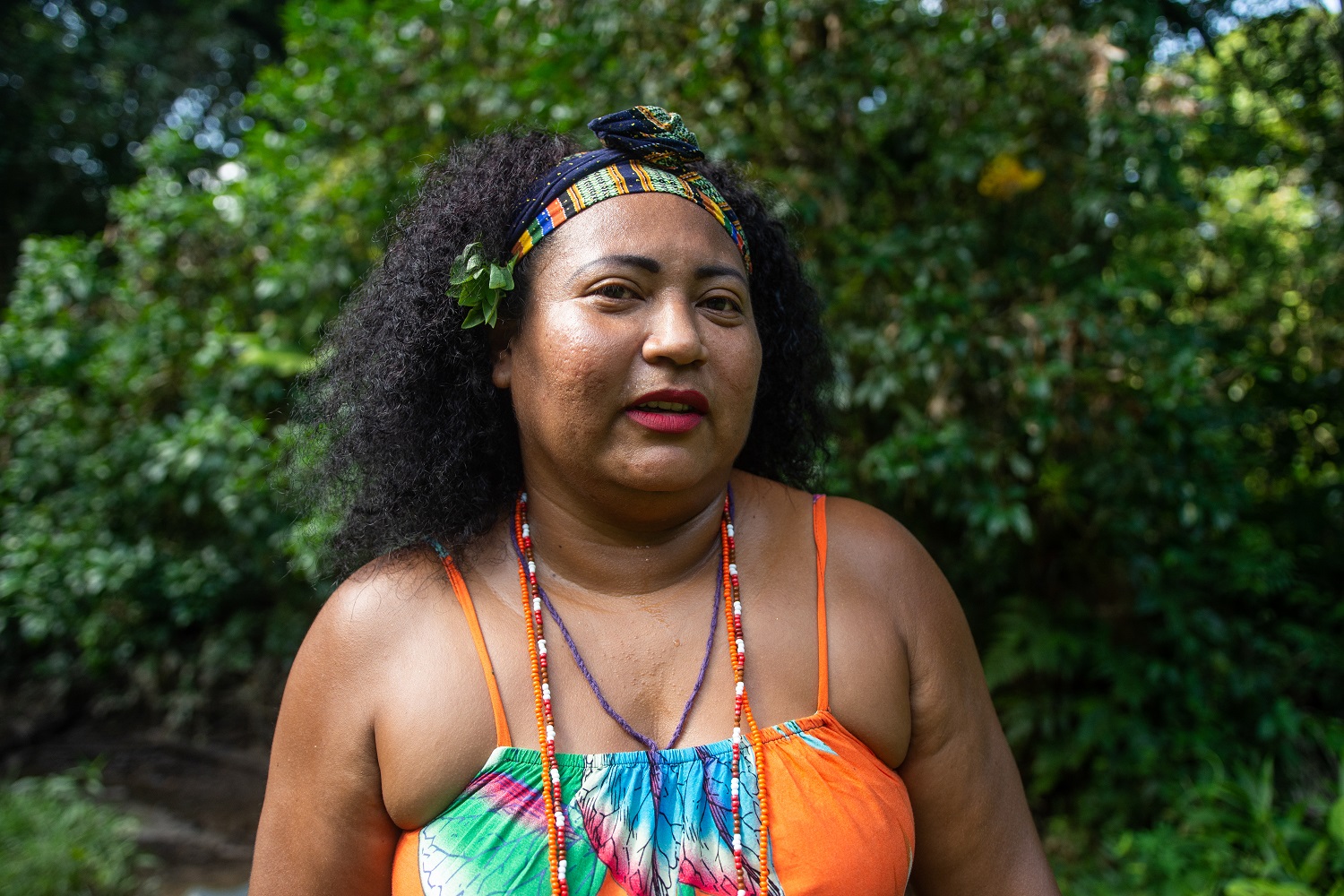
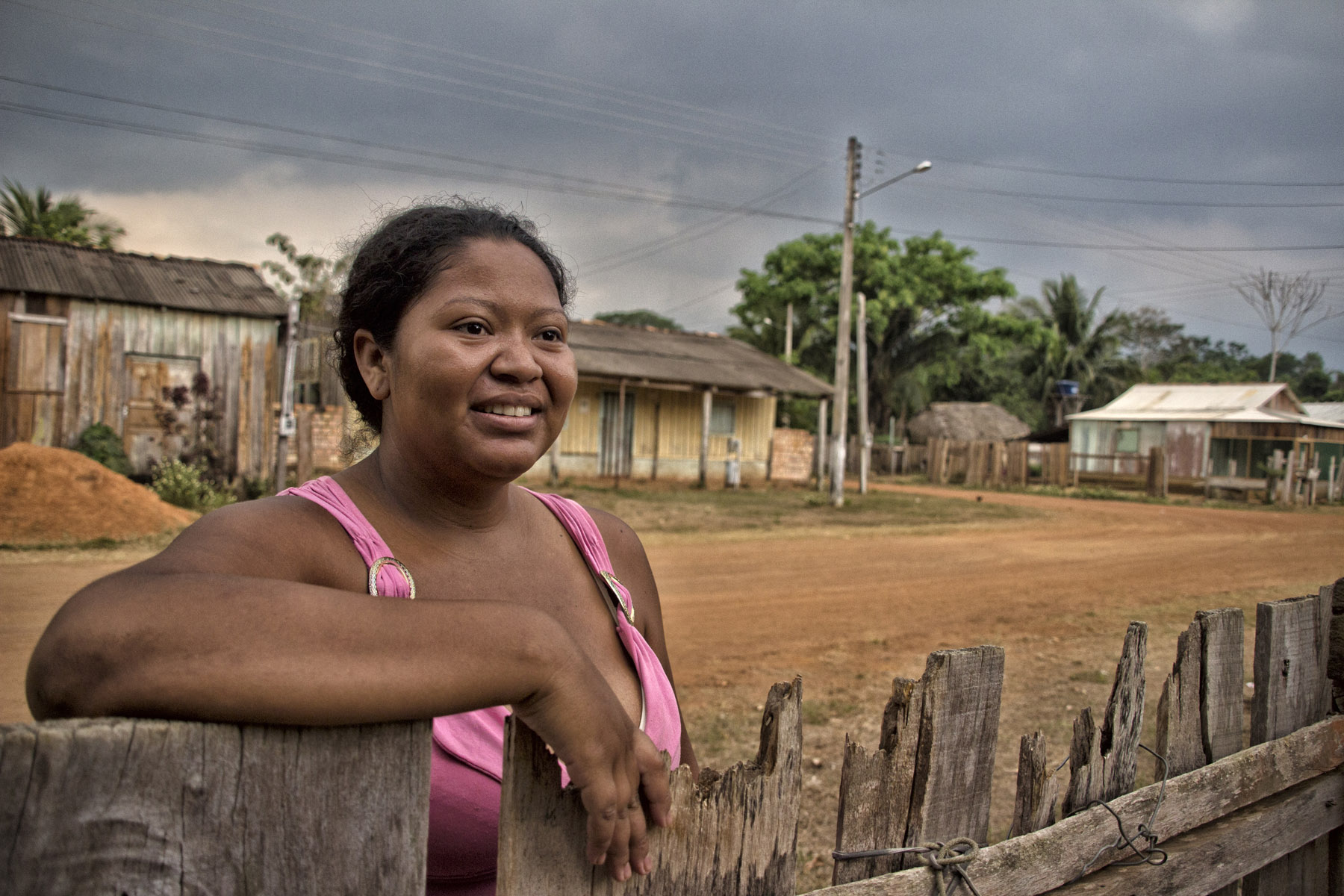
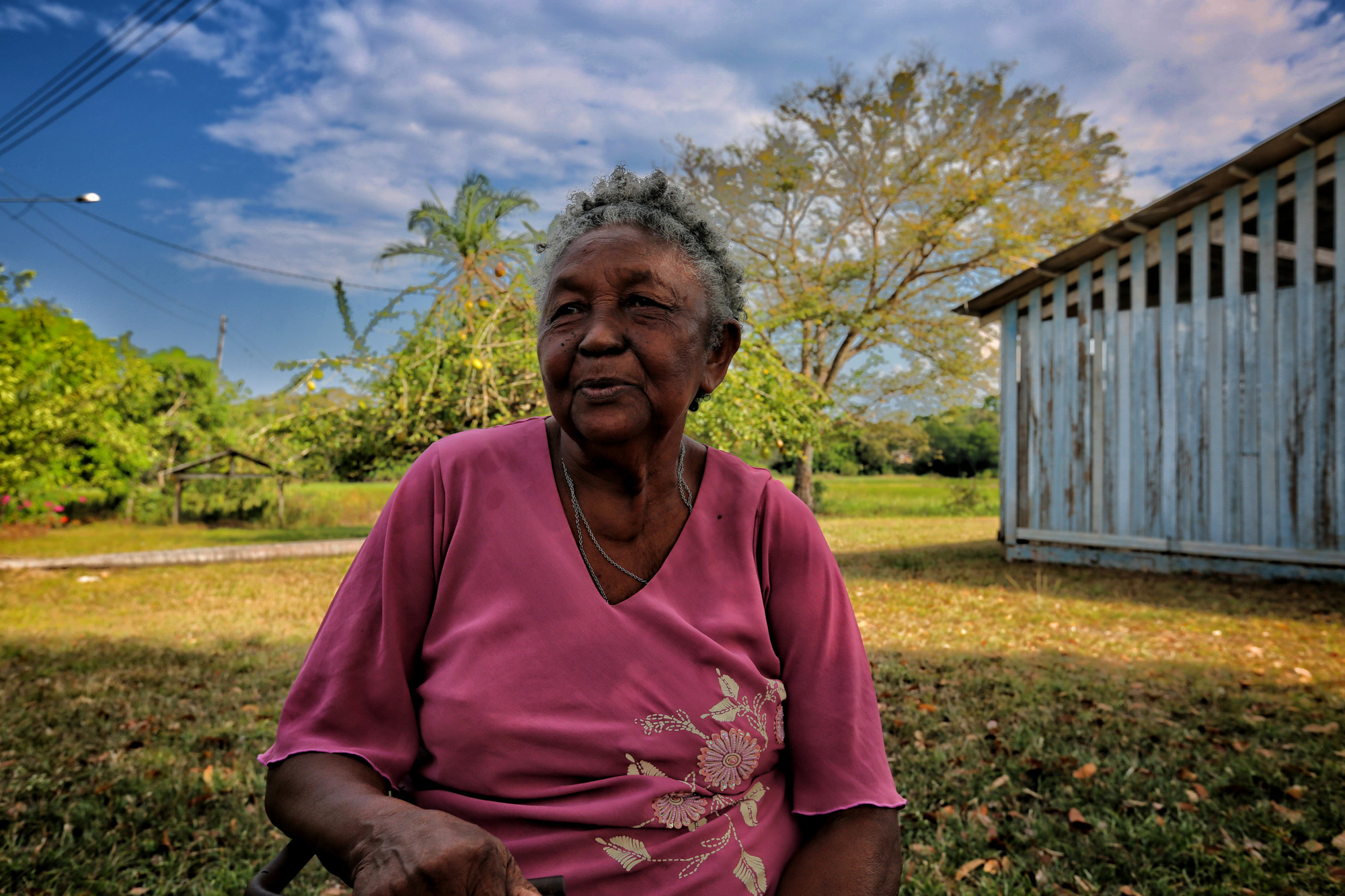
The road to the quilombo of Kalunga, in the Cerrado highlands of Goiás state, takes several hours by dirt track from the nearest town. The landscape is dramatic and spare: red earth, twisted trees, a sky hanging lower and closer than it should. The people who live here, some 4,000 of them spread across a territory spanning three municipalities, did not arrive by accident. Their ancestors chose this place precisely because no one else wanted it and because in its remoteness lay a freedom available nowhere else.

Quilombos were communities established by Africans who escaped enslavement in colonial Brazil; people who ran, fought their way out, and refused the conditions imposed on them to ultimately build something entirely new in the interior. The word itself (“quilombo”) comes from the Kimbundu language, spoken by the Bantu peoples of present-day Angola – “kilombo” referring to a warrior camp, a place of organised resistance and collective life. Brazil’s quilombos were exactly this, not merely refuges but functioning states and communities with their own governance, agriculture, spiritual practice, and systems of law.

The most celebrated quilombo in Brazilian history was Palmares, a confederation of settlements in the present-day Alagoas state that at its height housed an estimated 20,000 people and survived for nearly a century – resisting multiple military expeditions before finally falling in 1694. Its leader, Zumbi dos Palmares, went on to become the central figure of Brazilian Black consciousness and is now commemorated annually on 20 November: the national day of Black Awareness. Palmares was the dramatic peak of a far broader story, in fact.

Across Brazil, quilombo communities formed wherever enslaved people could reach marginal land: in the Amazon basin, Bahian interior, highlands of Minas Gerais, and across the deep south. They developed in relative isolation – adapting African agricultural, spiritual, and social systems to Brazilian ecologies – and traded with neighbouring Indigenous communities and free Black and mixed-race populations in colonial towns, building webs of solidarity that the official record largely chose not to see.

The Brazilian constitution of 1988 formally recognised quilombola communities as the rightful occupants of their ancestral territories, granting them land rights based on historical occupation. The legal process of titling those lands, however, has played out as a slow and contested process, persistently obstructed by agricultural interests and state indifference though the recognition itself marked a genuine turning point. More than 6,000 quilombola communities are now formally certified across Brazil, with hundreds more pursuing certification.

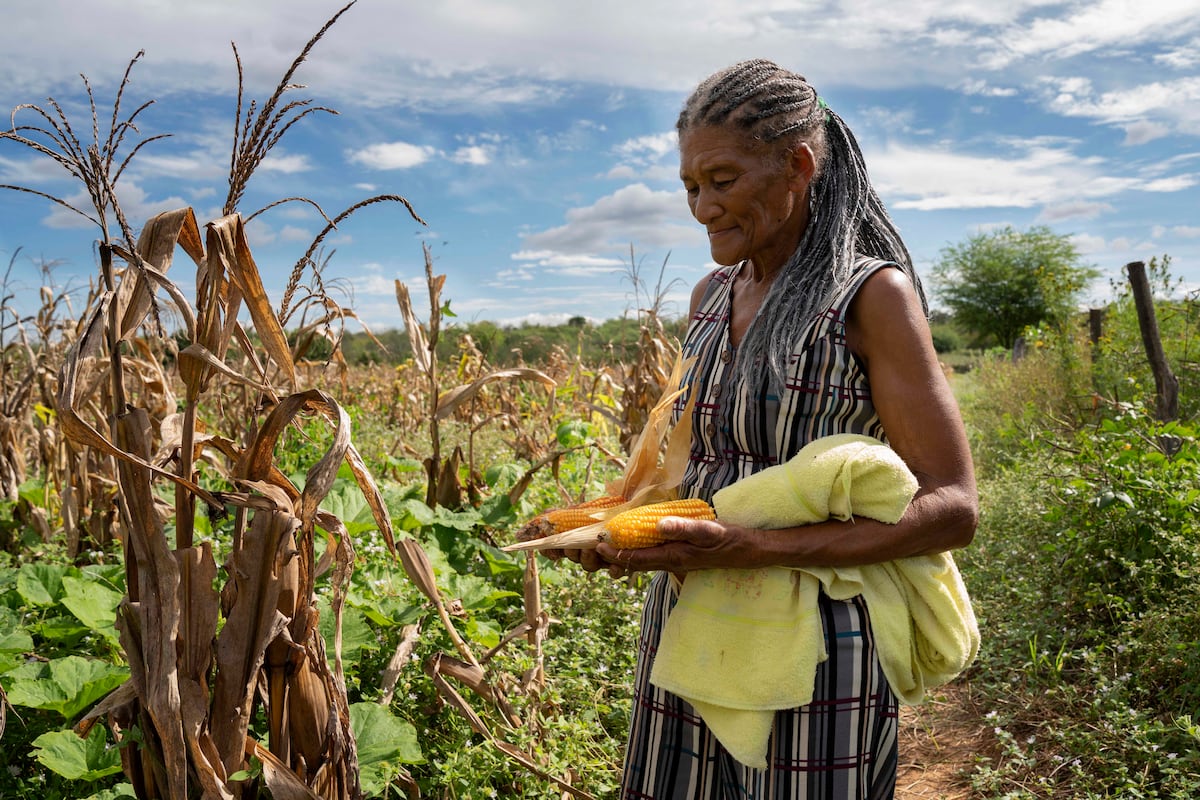
In these communities, African cultural forms have survived in ways that are less visible but often more complete than in urban settings. The jongo of south-eastern Brazil and the tambor de crioula of Maranhão retain direct structural links to Bantu musical traditions. Healing practices draw on Angolan and Congolese botanical knowledge, adapted over centuries for Brazilian plants. Agricultural methods developed in the quilombos represent sophisticated ecological intelligence that contemporary food sovereignty movements are only now beginning to recognise as valuable.

The quilombola communities are archives in the truest sense, not paper archives but living systems where knowledge is held in practice, land-use, and ceremony and how a community organises itself around water, a harvest, and the memory of those who came before.

The continuum here is not metaphorical but territorial. It is the land itself, held by communities whose ancestors chose freedom over safety and built – deep in the interior of someone else’s country – a world answering to no one but itself.

That world endures, one of the most radical acts in the history of the African diaspora baked into its endurance.

“That world endures. And in its endurance is one of the most radical acts in the history of the African diaspora.”

Image citations:

  1. https://apnews.com/article/climate-brazil-slave-descendants-quilombos-cop30-ff980cc36dcd8f120eb1799c7fbf9aa0
  2. https://commons.wikimedia.org/wiki/File:Quilombolas.jpg
  3. https://pulitzercenter.org/stories/quilombola-people-pandemic-meant-abandonment-racism-and-necropolitics-portuguese
  4. https://www.nationalia.info/imatges/noticies/quilombo_dos_palmares.jpg
  5. https://projetocolabora.com.br/wp-content/uploads/2021/02/quilombo-3-1.jpg?x33110
  6. https://projetocolabora.com.br/wp-content/uploads/2021/02/quilombo-8-1.jpg?x33110
  7. https://amazoniareal.com.br/wp-content/uploads/2018/01/Moradora_QUILOMBO-DO-FORTE-DA-BEIRA_FOTO-MARCELA-BONFIM.jpg
  8. https://amazoniareal.com.br/wp-content/uploads/2017/09/QUILOMBO-AMAPA-FOTO-ANDERSON-MENEZES2.jpg
  9. https://imagenes.elpais.com/resizer/v2/CNYZNKRWKFHJ3A5B2FVAOMAXKU.jpg?auth=b95ebb305f6f395c654bd81f7ef66b66ebb14cff4ccc5b9619d35b89b53edd07&width=1200
  10. https://brazilreports.com/wp-content/uploads/2023/08/Cavalcante-GO-Quilombo-Kalunga-Weverson-Paulino.jpg
Culture

The Discomfort is the Point

Hanneke Lourens builds furniture from the textures of a country that never leaves you alone.

There is a particular kind of seeing that belongs to people raised in landscapes of contradiction. Not the romantic contradiction of travel brochures but the real kind, the kind where corrugated iron catches sunlight so precisely it becomes sculpture and security bars on a Johannesburg window arrange themselves into geometries European minimalists spend entire careers trying to invent. Hanneke Lourens saw all of it. She still does.

The South African-born, Northern California-based furniture designer has – across three collections since 2024 – built a body of work that refuses the most convenient version of its own story. It’s not African-inspired design in the way the industry typically packages it with no mud cloth upholstery nor token pattern. Lourens works in white oak, walnut, ash, and salvaged old-growth redwood. Her references are structural, spatial, and stubbornly specific as seen in the corrugated metal sheeting defining South Africa’s urban and peri-urban landscape. It’s seen in the stainless-steel burglar bars bolted to facades in every neighbourhood from Sandton to Khayelitsha and in the improvised public seating on sidewalks where the state never bothered to provide benches.

Her debut, the Corrugated Collection, translated the undulating profile of zinc sheeting into hand-carved oak curves: five pieces oscillating between Brutalist weight and the kind of lightness that only comes from knowing exactly where to remove material. Each wave in the wood serves the same purpose it serves in metal: structural integrity through shape. The collection announced a designer whose sophistication lives in logic, not flourishing.

The Leftover Bench that followed stripped the work back even further. Crafted entirely from reclaimed redwood – posts salvaged from a demolished building in Cloverdale and planks milled from a tree abandoned on a forest floor since the late 1800s – the bench is a deliberate collision of two worlds, its form mimicking makeshift communal seating found across South African streets via a stool, a chair, and a bench pushed together by necessity. Darkened nail holes from previous construction are left visible, not as an aesthetic detail but as biography. The wood remembers what it was before, Lourens having presented it at Works In Progress III during San Francisco Art Week. Positioned on a clifftop above the Pacific as a piece born from the spatial inequality of Apartheid-era planning, it looked out over a coastline where designed outdoor furniture is so abundant it disappears into the scenery.

Her most recent work, the Barred Collection, is perhaps the most confrontational: four walnut and ash pieces interrupted by slim stainless-steel bars with tabs and screws connecting columns, deliberately imitating the security infrastructure marking nearly every building in South Africa. The Barred Chair uses a cubed steel grid as its backrest, the Barred Coffee Table built from salvaged old-growth redwood and wearing its chunky legs dotted with darkened nail holes like evidence. The steel catches light the way jewellery does, exactly the tension Lourens is engineering: protection as ornamentation, anxiety as aesthetic.

What makes this work matter beyond the objects themselves is its methodology. Lourens isn’t translating African materiality for a Western audience. She’s insisting the design intelligence embedded in everyday South African environments – the structural ingenuity of informal construction, unintentional beauty of security architecture, and communal problem-solving of streetside furniture – constitutes a design language as rigorous and worthy of elevation as anything taught at a European institution. Having trained at a traditional woodworking school, she now works out of a converted cow barn in the redwoods and hand-builds every piece. The craft is impeccable, but the ideas come from home.

That’s a distinction worth holding onto. Innovation, in an African context, has never required permission but instead simply recognition.

“Protection as ornamentation, anxiety as aesthetic.”

Culture

The Patience of Two Identities: Being African Inside Japan

In one of the world’s most ethnically uniform societies, a small but growing community of African and Afro-Japanese people are navigating what it means to be visibly different yet undeniably home.

Japan takes considerable pride in its homogeneity, the idea of a singular, unified Japanese cultural identity (expressed via language, comportment, aesthetics, and the rituals of daily life) shining through as one of the country’s most enduring narratives. It is also – as most national narratives are – profoundly incomplete.

The African presence in Japan is older than most people realise. When Portuguese traders arrived in 1543, they brought with them enslaved Africans from their East African trading posts. A figure known in Japanese historical records as Yasuke – believed to have hailed from present-day Mozambique – arrived to Japan in 1579 and entered the service of the feudal lord Oda Nobunaga, who granted him the rank of samurai. Yasuke is the first named person of African descent documented in Japanese history. His story, recovered and amplified in recent decades, has become a touchstone for Afro-Japanese identity: proof that this presence isn’t an accident of modernity but indeed a thread woven into the country’s oldest and most enduring fabric.

The modern Afro-Japanese community is distinct from its historical antecedents, however, and composed largely of two groups: the children of African migrants (predominantly from Nigeria, Ghana, Kenya, and Cameroon) who arrived in Japan from the 1980s onward for work, study, or sport and the mixed-race children of African-Japanese partnerships (many of whom were born and raised entirely in Japan and know no other home). Together, these groups number in the tens of thousands and are concentrated mainly in Tokyo, Osaka, Yokohama, and Nagasaki.

To be Afro-Japanese is to negotiate a peculiar kind of visibility. Japan’s social architecture is not designed to accommodate differences in the way more overtly multicultural societies are. The experience of being Black in Japan – of being seen, stared at, and addressed in fragmented English by strangers who assume you cannot possibly speak Japanese – is simultaneously wearing and clarifying. Many Afro-Japanese people describe a heightened consciousness of self about how they carry themselves, what they represent, and the distance between how they’re perceived and who they truly know themselves to be.

A great deal of creative work exists in this same gap. Afro-Japanese musicians, visual artists, and writers produce work that refuses easy categorisation: work that’s Japanese and African at once, drawing on Yoruba colour theory and ukiyo-e composition in the same breath and setting Afrobeats rhythms inside the formal architecture of Japanese musical tradition. This is not confusion but precision, people working out – in public and through their art – what their legacy is and might yet still become.

Models and fashion figures of African-Japanese heritage are shifting conversations about beauty standards in Japan, a country whose beauty industry has historically defined itself in opposition to Blackness. Their presence – deliberate, composed, and unwilling to diminish themselves for anyone’s comfort – has opened up debates nowhere to be found a decade ago.

For centuries, people from outside Japan have arrived, stayed, and become part of the social fabric even when the official story has no place for them. The Afro-Japanese community is the latest chapter in that long, largely untold history of arrivals who remain and shape the country from within.

The question the African continuum poses everywhere is asked here with particular clarity: What does belonging look like when the place you belong to does not yet have the language for you? Japan is learning, slowly and imperfectly, to expand its self-understanding. In the meantime, the people who live this same question carry two identities with a patience that is (in itself) a form of grace.

“What does belonging look like when the place you belong to does not yet have the language for you?”

Image citations:

  1. https://perspectivesinanthropology.com/2024/01/01/black-japanese-the-african-diaspora-in-japan/
  2. https://africa.isp.msu.edu/news_article/22285
  3. https://perspectivesinanthropology.com/2024/01/01/black-japanese-the-african-diaspora-in-japan/
  4. https://vocal.media/history/old-japan
  5. https://medium.com/bambzi-ellis-the-pen/not-just-a-shadow-the-story-of-yasuke-5efa7d50e77e
  6. https://www.aaihs.org/the-significance-of-yasuke-the-black-samurai/