
Olawunmi Hassan and Adaobi Samson, film directors from Lagos, Nigeria, are celebrating winning the non-fiction category at the Sony Future Filmmaker Awards 2024 with their short film, Ìrún Dídì. Their first documentary and first win in a contest of this nature, the film showcases the art of Yoruba hairmaking and the talented stylists behind it. “This experience has been incredibly meaningful. It has made me realise there is so much more to achieve beyond what I can comprehend. It has also shown me that my wild and ambitious dreams are achievable. This experience has increased my trust in myself and my vision, and I now have more confidence in my ideas,” says Olawunmi.
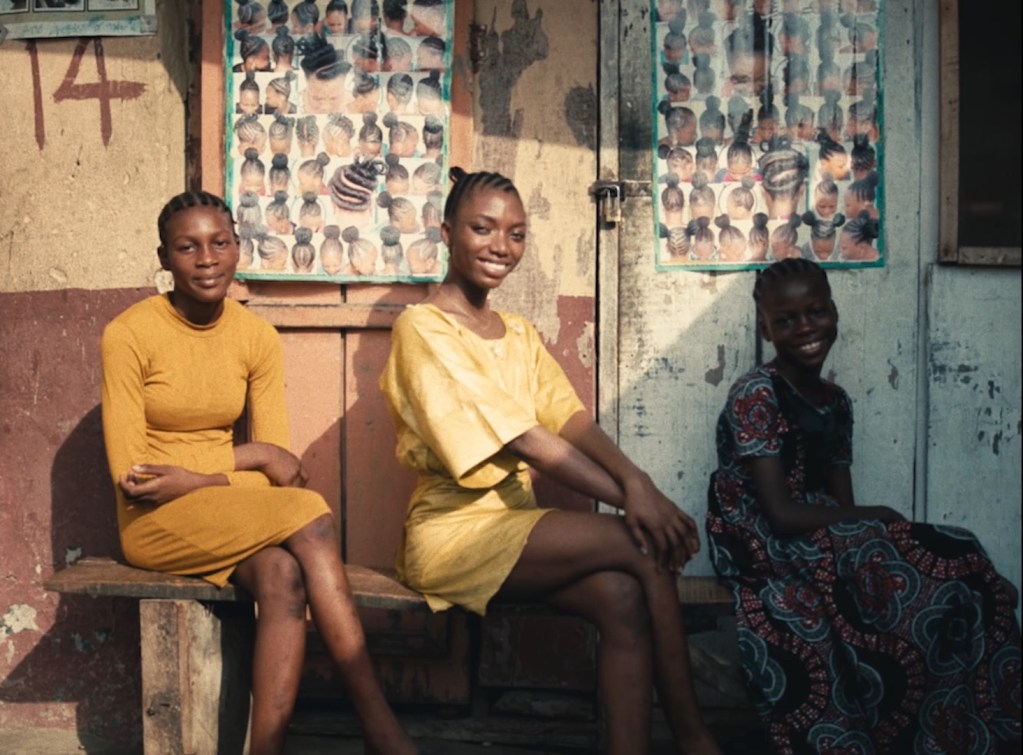
Adaobi believes winning this award validates her work. “Competing against thousands and emerging victorious was unexpected, to be honest. Most importantly, it means I directed a film that resonated with and was loved by the world, which felt incredible,” she says.
The pair met while interning at Pinkline Films two years after they started making films in 2020. They teamed up in the first half of 2023 to create their Awards entry, focusing on their unique filmmaking style and shared love for African art.
Six categories (Fiction, Non-Fiction, Environment, Animation, Student, and Future Format) meant there could be only six winners. Ìrún Dídì was selected from over 8,400 films submitted by more than 5,000 filmmakers across 148 countries and territories.
Hassan and Samson and their fellow winners Katie Blair (USA, Fiction), Solmund MacPherson (Canada, Environment), Kyle Novak (Czech Republic, Animation), Raheem Razak (South Africa, Student), and Cristian Daniel (Uruguay, Future Format) were drawn from 30 shortlisted filmmakers, whittled down from a longlist by celebrated Australian filmmaker Unjoo Moon and Emmy-award winning cinematographer Robert Primes ASC. Ultimately, the final awards were made by Michael Barker and Tom Bernard, Co-Founders and Co-Presidents of Sony Pictures Classics (Call Me By Your Name, The Father, Whiplash); Rob Hardy ASC, BSC, BAFTA award-winning cinematographer (Civil War, Mission: Impossible – Fallout, Ex-Machina); and Kate Reid BSC, acclaimed British cinematographer (Game of Thrones, Great Expectations, Silo). Both stages of the judging process were chaired by award-winning director Justin Chadwick (Mandela: Long Walk to Freedom, The Other Boleyn Girl, Tulip Fever, Shardlake).
Established by Creo and sponsored by Sony, the Sony Future Filmmaker Awards is a major annual awards programme for short films. It was conceptualised to provide a gateway for the development of exceptional cinematic talent, and it champions filmmakers with an original perspective on storytelling. This was the second edition of the awards, and winning a category is a significant achievement in the film industry.
The Sony Future Filmmaker Awards jury said: “This year’s winners traverse borders and cultures, a global gathering of creative talent set to make their mark in our industry. The winners each approach their stories with originality; from a portent of an eroding society to a surreal take on family pressures [and] an animated love story suspended in time: we were struck by the ingenuity of these filmmakers and their fresh perspective on the world. It is with great pleasure we celebrate the winners, as well as the wider cohort of 30 filmmakers who comprised this year’s shortlist, and we look forward to watching as they take their next steps in cinema.”
The Non-Fiction category awards short films that are predominantly factual in content. This can include archive and documentary footage, reenactments and animation. The category winner receives a Sony camera and lens kit and US$5,000.
Ìrún Dídì presents hair plaiting as a profoundly expressive art form, where each braid is crafted with care and creativity. The film explores the link between hair plaiting and self-love, revealing each style’s personal stories, social significance, and ancestral connections. It highlights how this craft has been passed down through generations, preserving cultural heritage. From traditional Yoruba techniques to modern interpretations, Ìrún Dídì traces the evolution of this timeless art as it becomes a sacred ritual of self-care and empowerment.
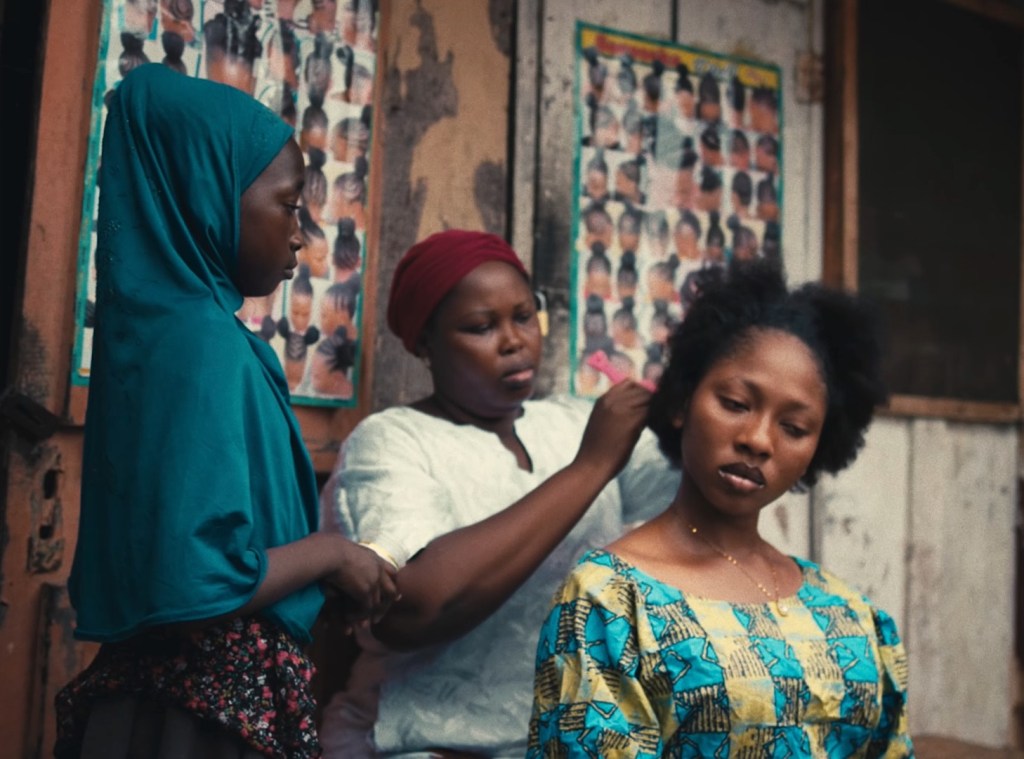
Olawunmi’s personal experiences as an African woman inspired the topic for this film. “It’s a lived experience of mine. Making these hairstyles as a child and admiring myself afterward was a huge inspiration. As I portrayed in the film, these hairstyles make me feel beautiful. As an African woman, it felt like the perfect topic for my first documentary.”
For Adaobi, this type of hairstyling was a significant part of her childhood. “I think every young girl in Africa has had those styles at some point in their lives. Back then, it was the highlight of hair care and beautification. When Olawunmi first approached me with the idea, I knew it was a story close to my heart. I had always wanted to explore tales of African art in a way that was personal to my own experiences.”
Collaboration was their most significant learning on this project. Olawunmi says she usually prefers taking the lead when executing her vision because she feels she’s the only one who understands it perfectly. “However, working with Adaobi taught me to trust my team and embrace the power of flexibility,” she says.
Despite a sense of familiarity from knowing each other before beginning the project, Adaobi says collaborating with Olawunmi “was quite interesting. She is deeply passionate about her work and on set you’ll see that she’s direct and highly skilled in expressing her thoughts. During post-production, we had our doubts about the project, but she consistently helped in finding solutions and ensured it came to fruition. The experience made each of us more assertive and reliable as we went through the whole thing together. It was really a fun project overall, and we didn’t expect anything significant to come from it.”
Olawunmi hopes that their film will enable non-African viewers to learn more about Yoruba culture and that African viewers will find relatable moments in it. She says, “A key part of the story is acknowledging that many African cultures share similar values.”
For Adaobi, relatability was vital. “I wanted viewers to watch the film and feel as if they were seeing a part of their own lives that they hadn’t fully understood before,” she says.

The Sony Future Filmmakers Awards return for a third edition in Spring 2025, and submissions are now open until 12 December 2024.
Photo credits: Olawunmi Hassan and Adaobi Samson, Nigeria, Ìrún Dídì, Winner, Non-Fiction, Sony Future Filmmaker Awards 2024
Directors: @hassan.wunmi and @adasam.xo
DOP: @uteh_unwana
Script: @hassan.wunmi
Camera assistant: @danny_042
Production manager: @davidsoetan
Cast: @mayowa_aderoju & viv_diva4
Still photographer: @claymansof
Hairstylist: Mrs Adekunle Ganiyat
Editor: @_osai.b
Colourist: @ebiama.abraham