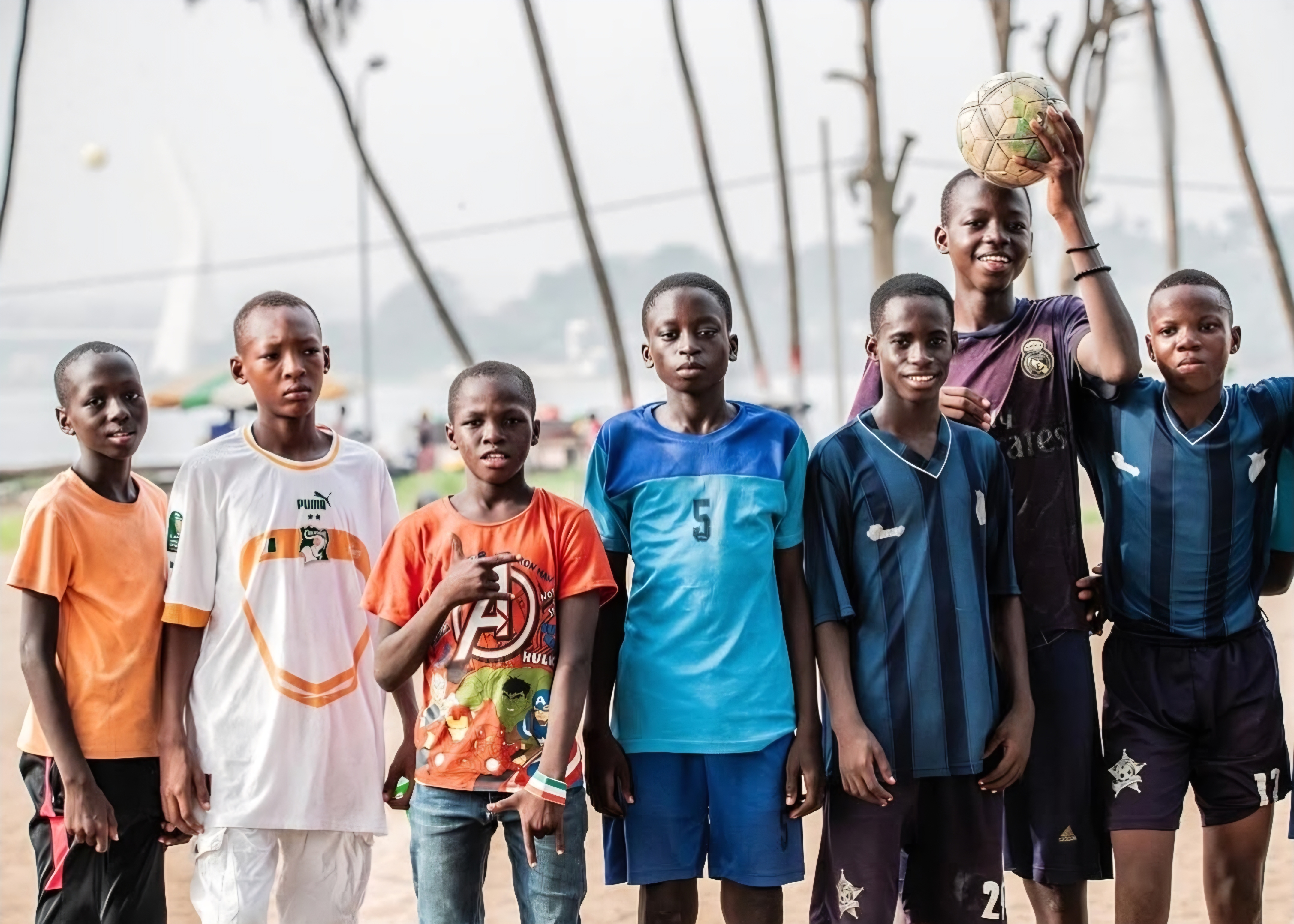
Football is often described as the world’s game: a language spoken across borders, classes, and cultures if you will.
Jamila Pereira
The Beautiful Game with an Ugly Truth: Football, Colonial Economies, and the Exploitation of African Youth
Taofeek Adeshina
Football is often described as the world’s game: a language spoken across borders, classes, and cultures if you will. For many young Africans, it represents not only joy but also the promise of escape – a potential ticket out of poverty, pathway to global recognition, or even a way to uplift entire families. Beneath the glamour of international tournaments and multimillion-pound transfers, though, lies a reality that is far less romantic. For all its sparkle and spectacle, football has traditionally functioned as an extension of colonial economies where humans are trafficked and talent, resources, and labour are extracted from Africa with little offered in return.
Taofeek Adeshina
Parallels to the colonial era are striking. Just as European powers once exploited African land and bodies for profit, modern football empires gain immense wealth at the expense of African youth – specifically their dreams and sacrifices. Talent pipelines are built across the continent, scouting children as young as 12 and promising them a future in European leagues. For every one who succeeds, however, countless others are discarded: stripped of their childhoods, often indebted to agents, and left with little education or support to rebuild their lives. Football’s empire thrives on this imbalance, exporting raw talent while importing little more than broken promises.
To fully understand this dynamic, one must consider the broader history of global sport. Football didn’t simply arrive in Africa as a neutral pastime but was introduced under colonial rule, often as a tool of discipline and control. British administrators, for example, encouraged the game in schools and mission stations while framing it as a civilising activity. What began as a colonial instrument, however, was quickly reclaimed by African communities who infused it with their own creativity and passion. In the post-independence era, football became a symbol of national pride and resistance as a way to assert identity on a global stage. Yet even as African nations found liberation, the economic structures of football remained tied to Europe.
Taofeek Adeshina
Taofeek Adeshina
Today, the global football economy mirrors the extraction model of colonial trade. African academies, many underfunded and poorly regulated, function like mines while identifying and refining raw talent for export. European clubs, meanwhile, invest relatively little in grassroots development across the continent yet reap extraordinary profits from African players following their integration into the global market. A handful of stars such as Didier Drogba, Samuel Eto’o, Sadio Mané became icons, their success stories circulated as proof of opportunity. Yet these same narratives obscure the reality of thousands of boys who never make it, their football dreams quietly discarded after they fail to meet the football empire’s impossible standards.
Such exploitation involves emotions as much as economics. Families often pool resources to send their children to academies or trials, persuaded by promises of contracts abroad with agents – some legitimate, many predatory – who profit from this desperation and charge fees for chances that rarely materialise. Those who do secure contracts often face cultural isolation, racism, and pressure to perform beyond their limits: their value to the system purely transactional, injury or underperformance leading to their swift replacement by another hopeful from the endless pipeline.
Such exploitation involves emotions as much as economics. Families often pool resources to send their children to academies or trials, persuaded by promises of contracts abroad with agents – some legitimate, many predatory – who profit from this desperation and charge fees for chances that rarely materialise. Those who do secure contracts often face cultural isolation, racism, and pressure to perform beyond their limits: their value to the system purely transactional, injury or underperformance leading to their swift replacement by another hopeful from the endless pipeline.
Taofeek Adeshina
Taofeek Adeshina
The challenge, then, is to imagine a football economy that serves African youth rather than exploiting them. This requires investment in local infrastructure – leagues, training facilities, and educational support – so young players aren’t forced to gamble everything in the hope of exportation to Europe. It also calls for agent and academy regulation to ensure families aren’t swindled and children aren’t treated as commodities. Most importantly, it requires a shift in the narrative: celebrating not just the African stars abroad but the local heroes who do their part to build football culture back at home.
Football has always been more than a game, after all, as a mirror of society reflecting both our aspirations and inequalities. For Africa specifically, it’s a source of immense pride and joy but also a reminder of how global systems continue to extract from the continent. To honour the beauty of the game, we must confront the ugliness of its empire or otherwise risk a continued cycle of exploitation as the dreams of countless African youth remain the raw material for someone else’s profit.