All print versions of Fifty Four now available digitally Explore the Digital Library →
Art

Luju Festival 2025: Where Soul, Story, and the African Future Converge

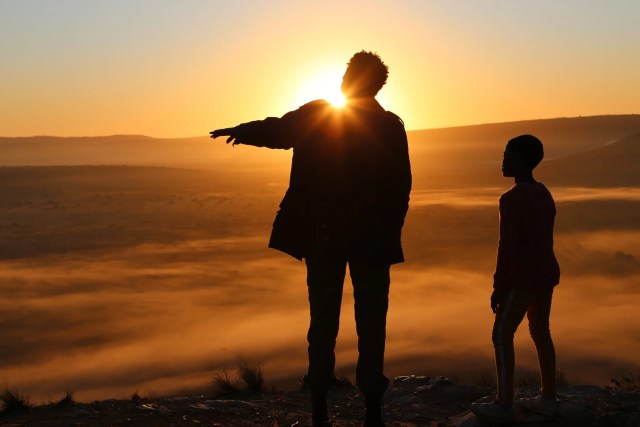
Set against the rolling hills and golden light of Eswatini, the Luju Festival is more than a date on the cultural calendar it is a living, breathing celebration of African creativity, heritage, and vision. On this particular year, me and my Fifty Four mag team enjoyed it as one of the most transformative and unforgettable festival experiences of our lives.

From the moment we arrived, the energy in the air told me it wasn’t just another event. Beyond the music, the food, and the fashion, it was the way the Luju team welcomed us with open arms, held space for us with care and intention, and made us feel instantly at home – every moment steeped in generosity, cultural pride, and joy.

I had the privilege of experiencing it all alongside my dear friend Mathilda Molokwane. Sharing the festival with her made every moment more meaningful, from the laughter between events to our shared awe as we watched the magic unfold and the pride involved in showcasing Mathilda’s incredible work. We thus enjoyed an opportunity not just to attend but to amplify the brilliance of African creatives like her in a space where storytelling isn’t just celebrated but necessary.

What sets Luju apart is its programming, an artful blend of performance, discussion, and cultural exchange. Beyond the music and runway moments, the festival carved out space for deep, strategic conversations about the future of African creativity, food systems, and general entrepreneurship.

The fashion panel (themed “A Return to the African Future”) brought together an exceptional lineup featuring Thula Sindi, Jay Jay Worral, Maureen Masingue, Phumzile Ntuli, and Sithembila Masuku: all sharing invaluable insights on scaling creative businesses and exploring how entrepreneurs can grow through operational intelligence, strong relationships, disciplined strategies, and well-built operating systems. The discussion touched on creating intentional distance between the brand and customer to build aspiration, tapping into new markets, using technology (including AI) to access critical data, and positioning businesses to attract investment.

Other sessions went far beyond fashion and delved into sustainability strategies, the importance of data access for making informed decisions, and the role cooperatives (e.g., Vukani Bo Make) play in empowering local communities – conversations reminding us that cultural work is inseparable from economic license.

Credits: Mathilda Molokwane

Some of the biggest moments centred on ancestral intelligence – mostly deep wisdom carried through generations – and we explored the significance of seeds as a source of life and living organisms within our cultural worldview. There were also conversations about ancestral innovation in the foods we eat, forage, and grow and urgent reflections on the detrimental impact of genetically modified seeds and (ultimately) food in general.

We spoke of Africa’s indigenous foods, many of which grow wild along our coasts and in the veld, and the need to return to organic farming rooted in our traditions. This was tied to the medicinal value of natural herbs in addressing today’s unprecedented health issues as well as the link between food choices and climate resilience. Coastal foraging, whether with respect to seaweed or edible ocean plants, for example, was celebrated as both ancient knowledge and future opportunity.

Equally moving were discussions on ancestral practices and rituals involving clay and vessels, including how they can restore our relationship with the land, embed meaning into our food rituals, and allow for spiritual communication between people, objects, and nature. Clay, likewise, is a metaphor for grounding, planting, and reconnecting.

The disconnection many feel today was also acknowledged, souls displaced from the land where they were born due to work, school, and migration, as a reminder that we’re not separate from what we eat. In traditional thought, our diets go beyond sustenance as indeed part of who we are.

Credits: Mathilda Molokwane


When the sun began to set, the sky was painted in hues of gold and rose as bonfires were lit, music floated through the breezy night air, and the moon rose to watch over us. I’ll never forget sitting under the stars, feeling the drums in my chest and knowing I was part of something timeless.

Then there was Sipho “Hotstix” Mabuse, my favourite performer of the weekend who danced on stage like the young man he’s always been at heart. Watching him, phone in hand, from the edge of the stage was pure joy. Not just about capturing a legend, it was about being in the moment while celebrating the vitality and spirit of African music as well as a living legend.

The rest of the weekend was a mixture of sensory joy: live music moved through our bones, food told a story of heritage in every bite, and fashion blurred the lines between past and future. Everywhere we looked, we saw evidence of the tireless work of the organisers, the dedication of the crew, and the unshakable passion of the artists and volunteers.


More than a professional milestone, this Luju partnership shines through as a cultural and personal gift affirming our Fifty Four mag mission: to champion African voices, preserve heritage, and tell the stories that remind us of who we are.

I left Eswatini with a heart full of gratitude, a mind brimming with new ideas, and the unshakable feeling that it was one of the best festival experiences I’d ever had in my 30 years of existence. Swaziland owes us nothing because the Luju team gave us everything.

Luju, thank you for the soul, the story, and the future. Until we meet again, may your colours stay bold, your music stay loud, and your spirit remain unshakably African.

Credits: Mathilda Molokwane
Art

The Last Ranger: Screen Review

Wildlife and animal poaching have been around for far too long, and honestly, normalised since we were kids – even if we didn’t realise it back then. Think about it…

How many of us grew up watching Cruella De Vil plot to skin dalmatians? Or Clayton in Tarzan, pretending to protect Jane while actually planning to poach gorillas? Or Percival C. McLeach in The Rescuers Down Under, who made poaching look like just another adventure?

These characters were obviously villains, but their actions were introduced to us so early and casually that we kind of just accepted them as part of the story. The message was there, sure, but we weren’t exactly encouraged to think about the real-world version of things like this – or our ability to do something about them. It was simply “how things were.”

All of that is changing. Today, awareness around poaching and wildlife conservation is growing fast. People are realising this isn’t just something that happens far away; it’s real, and we do have a say in it.

Enter The Last Ranger, a powerful South African short film that dropped last year and has earned an Oscar nomination. It’s a reminder that we all play a role in what happens to our wildlife. The question is: Which side of the story are we on?


“We all have a role to play in conservation – it just looks different for each of us.”
David S. Lee, actor and The Last Ranger filmmaker


Felicia at Q&A

The internationally praised film is rooted in truth and tells a deeply emotional story of loss, resilience, injustice, poverty, and how badly some governments have failed their people. Set in the Eastern Cape during the COVID-19 pandemic, the story centres around Litha (played by Liyabona Mroqoza), a young girl with a huge love of wildlife and family – something that becomes clear within the first few minutes.

Litha comes from a modest background. She’s raised by her father and grandmother, who – like many other families in the region – are hit hard by the pandemic. Tourism comes to a halt, and with that, any income her father had made carving wooden souvenirs. He tells her he has to leave home to find work but doesn’t say where. Litha’s grandmother, meanwhile, isn’t exactly thrilled with the girl’s independent spirit and tells her she’s “too wild to be under her hair,” pushing Litha to act on her own.

The Last Ranger Cover
Liyabona Mroqoza (Litha) and Avumile Qongqo (Khuselwa)

Wanting to help, Litha grabs her father’s wooden rhino carvings and heads out to a nearby lodge in the hopes of selling them. On the way, she bumps into Khuselwa: the last ranger still patrolling the area and monitoring the wildlife that remains. Litha quickly learns a harsh truth: the lodges are closed and won’t be opening anytime soon.

Seeing how disappointed she is, Khuselwa invites her along on a ride to see real rhinos in the wild – an offer too tempting to refuse. 

Khuselwa and Litha connect pretty quickly as they ride across the landscape in her jeep. Their relationship feels open and honest from the start. Litha’s never used a video camera before, so when Khuselwa flips the screen and she sees herself for the first time, it’s a sweet, innocent moment that really captures her childlike wonder.

As they drive through the bush, Litha is wide-eyed while taking in all the wildlife around her. She learns the English word for “giraffe” and even sees a rare white rhino up close. One of the rhinos, Thandi, is familiar to Khuselwa. The two women keep talking as they sit in the jeep near her, with Thandi quietly listening in and just going about her day.

Things take a sudden turn, though. Thandi starts acting strangely – almost like she’s dancing – which is when it hits Khuselwa that something’s not right. The calm moment quickly shifts into something more serious, and now it’s up to Khuselwa to protect both Litha and Thandi from whatever danger is unfolding. What had started off as a beautiful moment turns into something much darker when poachers show up and suddenly throw Litha and Khuselwa into a life-threatening situation.

Lindy G via Unsplash

The Last Ranger is a powerful reminder that so much of what we encounter today – like safaris and the concept of poaching – didn’t just appear out of nowhere. These ideas really took shape when colonisers came in, took over the land, and disrupted how communities had lived with nature for generations.

Before colonisation, hunting was a way of life for many African communities – whether for food, cultural rituals, or simply to live in balance with nature. Once colonial governments took control, however, they introduced “preservation” laws that made it nearly impossible for local people to hunt on their own land. Suddenly, what had always been a way of life was deemed illegal. Colonial powers, meanwhile, were free to hunt for sport, sell animal products, and create luxury safari industries. So, what was once normal and necessary became “poaching” – but only when done by locals.

Fast forward to now, and not much has changed. Many of those colonial laws are still in place or only slightly rebranded. Conservation efforts still too often ignore the people who actually live closest to wildlife. On top of that, governments in many regions don’t provide proper support or alternatives – especially during hard times like the COVID-19 pandemic when tourism (a major source of income) dried up. So, for some people, poaching becomes a means of survival: not because they want to harm animals but because they’re left with no other choice. 

The Last Ranger Still 2

“Poverty can betray even the deep love we have for animals and our own communities.”

Peter Egan, actor, conservation advocate, and Helping Rhinos patron

At the same time, rangers – like Khuselwa in the film – are stuck in the middle, trying to protect wildlife but often underfunded, under-protected, and at serious risk not just due to wild animals but also armed poachers and organised crime groups that see wildlife as profit. Many governments don’t invest enough in enforcement, anti-poaching programs, or efforts to track down and hold powerful poachers and trophy hunters accountable.

That’s the real issue here: the whole system still favours outsiders. Westerners can fly in, pay huge fees, and hunt endangered animals under the banner of “conservation” or “sport.” Meanwhile, the people who’ve lived with and respected these animals for generations are criminalised if they try to fish or hunt for food.

In the end, this isn’t just about wildlife – it’s political. The term “poaching” itself has colonial roots, the practice used to strip local people of their rights and justify the takeover of land and animals by outsiders. Colonisation and poaching are tightly connected, and unless we begin addressing that same history, the same old power dynamics will continue to shape conservation but with new branding.

Litha mourns Thandi

CITES and the Fight Against Poaching

Back in 1973, 80 countries signed an agreement called the Convention on International Trade in Endangered Species (“CITES” for short). The goal was to control and limit the international trade of endangered animals and plants. From the beginning, some African species, like rhinos, were already on the protected list.

Fast forward to 1990, and African elephants were officially added. That meant trading ivory for commercial purposes was no longer allowed, which had a massive impact: ivory poaching dropped off fast and became more manageable. The same couldn’t be said for rhinos, unfortunately, still heavily targeted by poachers ever since.

On-the-Ground Anti-Poaching Efforts

Beyond those big international moves, powerful grassroots efforts took shape across Africa. Take Helping Rhinos, for example, this group playing a big role in founding The Black Mambas – the all-female anti-poaching unit that inspired The Last Ranger. Their story really resonates with rangers like Khuselwa and many others on the front lines.

“I would die to protect wildlife.”

Sergeant Felicia Mogakane, member of the Black Mambas anti-poaching unit

Community-driven projects also focus on transforming former poachers into protectors of wildlife. John Kasaona, a key figure in this space, works in Namibia to help set up community conservancies (protected areas run by locals). He discusses how many people in his region used to poach just to survive, either to eat or earn money for their families.

Liyabona Mroqoza (Litha) and Avumile Qongqo (Khuselwa) copy

When Kasaona spoke at TEDx, he shared a bit about his own background. He grew up under apartheid, with only white citizens allowed to hunt, farm, and use natural resources. Anyone Black who tried to do the same was labelled a poacher, fined, or thrown in jail. As he put it, “We were not regarded as responsible enough to use wildlife.”

Kasaona’s approach? Hire the people who know the land better than anyone (former poachers) and show them how wildlife can actually benefit their communities, a true game-changer in Namibia.

The Bigger Picture

The Last Ranger helps shine a light on how international laws like CITES team up with local efforts to fight poaching. Stopping poaching in Africa isn’t just about laws, however, but also comes down to creating real opportunities and respect for the people living alongside wildlife.

In the end, it’s about balance. Protecting animals and supporting communities is the only real way forward, tasking us with ensuring both people and wildlife can live side by side safely.

Liyabona Mroqoza (Litha) and Avumile Qongqo (Khuselwa) copy
References:


ThoughtCo, A Brief History of Poaching in Africa, 2020
Kindred Films, The Last Ranger, 2024
SOAS, Poverty, Poaching and Trafficking: What Are The Links?, 2024
The British Journal of Criminology, Responses to Wildlife Crime in Post-Colonial Times. Who Fares Best?, 2020
TEDx, How poachers became caretakers, 2015
Taylor & Francis Online, Neo-colonialism and greed: Africans’ views on trophy hunting in social media, 2019
Art

The Artful Essence of Black Womanhood with Sungi Mlengeya

Sungi Mlengeya, Portrait 2, © Sungi Mlengeya

Born in Dar es Salaam, Tanzania, and now based in the city of Arusha, she has long explored the contours of artistic expression, navigating both personal and collective storytelling. Her work is an arresting interplay of dark, bold female figures set against vast, unpainted spaces – an artistic choice that speaks volumes about presence, absence and infinite possibility. 

Rooted in a deep sense of identity and a quiet defiance against mainstream expectations, Sungi’s paintings serve as personal expressions and broader cultural narratives.

“I refer to myself as a creator,” Sungi says. “I love making things, the transformation of creating something from nothing. It’s a fulfilling journey, one of boldness and surprise.” 

Sungi Mlengeya


Minimalism as a narrative tool

Sungi’s signature use of negative space came about by chance. In her early works, she searched for the perfect background – something that would make her figures stand out with striking clarity.

“I worked on the face first, and when I was done, I fell in love with the contrast of the dark tones against the white background. That absence became meaningful,” she explains.

Sungi’s empty backgrounds represent limitless potential, the moment before making a commitment, where anything is possible” she says. It invites the viewer to step in, to imagine and construct their own narratives beyond what is immediately visible. The absence of environmental cues or clothing frees the subjects from temporal or geographical constraints, allowing them to exist in an unconfined, universal space.

This approach is particularly poignant for Black women, who often lack spaces where they can be fully seen and valued. “The blank space becomes a sanctuary,” she says. “A place where these women can just be.”

Sungi Mlengeya, Ripple, 2024


Power of representation

At its core Sungi’s art is a celebration of Black women. “I get asked a lot why I paint Black women, and it surprises me every time – as if I’m not one myself,” she says, laughing. To her, it is the most natural thing to document, commemorate and uplift the people who shape her world.

“The women in my paintings are people I know – family, friends, acquaintances. Some I’ve known for years, others for a short time. But symbolically and realistically, they all represent this need to celebrate and document moments, emotions and existence.”

While her work comes from a deeply personal place, she acknowledges the broader impact it has, especially in spaces where Black women’s representation in art remains limited. “I was fortunate to grow up surrounded by people who look like me, where our representation in daily life wasn’t an issue. But I understand that in other parts of the world, that’s not the case. If my art reaches those spaces and contributes to a sense of belonging and empowerment then I’m happy.”

Sungi Mlengeya, Afloat, 2024


Cultural influences and artistic evolution

Being a Tanzanian artist, Sungi is acutely aware of the expectations placed on African art. 

“In Arusha, where I live, the art scene is heavily shaped by tourism – wildlife paintings, the ‘Big Five’ safari themes, and Tinga Tinga art, which is a national style,” she explains. “I knew from the beginning that I didn’t want to follow that path.”

Instead, she chose figurative painting, particularly the human form, as a means of artistic exploration and distinction. “I started with faces. It felt like a natural way to gauge my skills. If I could paint a face, I knew I could push myself further,” she recalls. Over time, her work expanded to include full bodies, exploring themes of movement, relationships and individuality.

In terms of technique, she has remained committed to acrylic on canvas. “The artists around me used acrylics, so that’s what I learned. Plus, I’m physically sensitive to certain materials, so oil paint was never an option.”


Sungi Mlengeya, Surge, 2024


Storytelling through form and movement

Sungi’s work is not just about representation; it is about storytelling. “In the beginning, my focus was purely on technique. But as I got more comfortable, I started exploring themes that resonated with me,” she says.

Her earlier works centred on togetherness – figures in quiet unity, celebrating sisterhood and connection. Over time, her paintings evolved to capture more dynamic expressions, incorporating movement and dance. “Dance embodies existence. A dancer is fully in the present moment, unbothered by anything outside of their space. That carefreeness, that joy – it resonates with me deeply,” she explains.

More recently, she has been drawn to the theme of water. “Water is transformative. It represents peace, clarity and freedom. The way it reflects light, interacts with the body – it’s something I want to capture more in my work.”


Sungi Mlengeya, In the Depths, 2024


Breaking boundaries in contemporary African art

Sungi’s work is gaining international recognition, but she is keenly aware of the misconceptions that plague African contemporary art. “One of the biggest is that African art has to follow a specific aesthetic – bold colours, tribal patterns or wildlife themes. But we live in a world full of influences. African artists are as diverse in style and subject as any other artists globally,” she says.

She believes that younger generations of African creatives are crucial in challenging these stereotypes. “There’s still a lot of unlearning that needs to happen, especially in terms of what we believe art should be and who it should speak to. The global art world is vast, and we should be creating with that in mind.”

Sungi Mlengeya, Shimmers, 2025


Future explorations

Sungi’s artistic journey is far from complete. As she continues to experiment with new themes and techniques, she remains committed to her core vision: capturing the essence of Black womanhood with depth and dignity.
Looking ahead, she hopes to explore water more deeply – both as a visual element and as a metaphor for transformation. “Water calms me. It’s reflective, fluid and grounding. I want to find ways to bring that essence into my work,” she shares.
As for what she wants viewers to take away from her art, her answer is simple: “I want them to get lost in it. To immerse themselves in the experience, as if they’re stepping into water. If they see the shimmer of the waves in my paintings, I want them to feel at peace.”

That sense of immersion takes center stage in Tides of Being, her upcoming exhibition at the NADA Exhibition Space in New York (311 East Broadway, 2nd Floor), running from April 10 to May 3, 2025. Opening night takes place on Thursday, April 10th from 6:00 to 9:00 PM—an ideal moment to experience Mlengeya’s evolving vision in person.

In a world that often demands definition and categorisation, Sungi Mlengeya’s work remains beautifully open – an invitation to dream, to celebrate and to exist beyond the margins.


Photos:
Sungi Mlengeya
 

Art

Celebrating womxn in art (no, that’s not a typo)

Talia Ramkilawan

February in Cape Town pulses with creativity, and this year, the city’s art scene took centre stage beyond the usual Valentine’s Day clichés. Africa’s leading auction house, Strauss & Co, hosted a Galentine’s Day event, celebrating the power of kinship among womxn, intentionally using ‘x’ instead of ‘a’ in that spelling to inspire conversation. Held at their Woodstock premises, the gathering brought together leading voices in contemporary art. 

Moderated by ArtThrob editor Nkgopoleng Moloi (the country’s leading visual arts publication), the conversation explored the impact of womxn and non-binary artists in shaping the art ecosystem. It highlighted their resistance, storytelling and radical creativity – framed as both a celebration and defiance.

The panel included Khanyisile Mbongwa, 2025 curator of The Stellenbosch Triennale; Liese van der Watt, curator of We, The People: 30 Years of Democracy in South Africa at The Norval Foundation; Mille Kalsmose, a visual artist who lives and works in Copenhagen and New York; and Talia Ramkilawan, winner of the 2023 Investec Cape Town Art Fair Tomorrow’s/Today Prize

Talia Ramkilawan, Untitled VII


Art as a space for healing and resistance

Reflecting on her journey as an artist and curator, Khanyisile speaks about her experiences at Stellenbosch University and how it shaped her perspective on art. “I experienced Black psychosis. I lost my mind,” she shared, stressing the psychological toll of systemic exclusion entrenched in the institution that continues today. Her work, deeply rooted in addressing historical and spatial injustices, has been instrumental in creating spaces where marginalised voices are heard. “I don’t believe anybody should be a martyr. I don’t believe I need to sacrifice myself for something to change.” 

For Khanyisile, the artist’s role is to continue the work of those who came before, pushing boundaries and expanding possibilities.


Khanyisile Mbongwa

This sentiment resonates deeply with Liese van der Watt, whose curation of We, The People: 30 Years of Democracy in South Africa examines the complexities of South Africa’s post-apartheid identity. The exhibition offers a “nuanced perspective on the country’s democratic journey, framing it not as a static given but an ongoing process.” Featured artists include Igshaan Adams, Dineo Seshee Bopape, Candice Breitz, Wim Botha, Bronwyn Katz, Sabelo Mlangeni, Walter Meyer, art collective Gugulective and the Keiskamma Art Project.


The power of radical love in art

The conversation turned to the theme of love as a form of artistic resistance, a concept introduced through the audience Q&A. Nkgopoleng referenced the work of the late Bell Hooks, an author, theorist, educator and social critic, who spoke about radical love and all its demands – encompassing care, devotion, passion, longing, tenderness, tough love, and rooted in responsibility and action.

Mille Kalsmose


This notion of love resonated with Mille Kalsmose and Talia Ramkilawan, who explore the themes of community, memory and identity in their work.

Mille, whose practice spans installation, sculpture and two-dimensional work, offers what can be described as spiritual survival kits – artworks that explore and imagine human existence and interconnectedness. Her long-term project Collected Memory is built on memories recorded on handwritten notes to create a paper archive. “I’m trying to gather humanity’s voices, their shared thoughts and emotions. I think we live in a time where a lot of people feel depressed, frustrated, that everything is falling apart, that we are getting more and more separated, and angry.”

Suffering from depression and dealing with her mother’s suicide, bringing on what she calls an “angriness victimhood”, her art became a tool for “spiritual and mental survival. Working once more from love, I feel like it’s the only place we can go now,” she said.


ArtThrob editor Nkgopoleng Moloi


Talia, an artist and teacher living in Cape Town, whose tactile tapestries are made with wool and hessian fabric, explores healing and cultural identity themes. Delving into the reality of enjoying love without shame, blending erotica and tenderness to reflect the radical experience of being brown, queer, and navigating pleasure, she spoke about the importance of vulnerability in artistic expression. She was critical of definitions and categories, such as ‘woman’, and how these are insufficient or inclusive.


Liese van der Watt


Womxn and non-binary artists shaping the future

The panellists acknowledged that while institutional barriers persist, there is a growing movement to create more inclusive and fair art spaces. 

“I’m more curious about how we as a human race move to a place of kinship … because kinship gives us more space. It doesn’t centre gender; it doesn’t centre all these things. It’s much more nuanced, it’s much more open; it’s a queering. It doesn’t mean everyone has to be queer, but in a queering world there’s much more space for us to be who we want to be,” says Khanyisile.

Liese echoed this sentiment, noting that curatorial and institutional shifts are essential in recognising the value of diverse artistic practices. “If we don’t actively work to change the structures of power in the art world, we risk repeating the same cycles of exclusion.”

Mille and Talia – artists who have gained recognition for their groundbreaking work – underscored the importance of community and mentorship in sustaining an artistic practice.


Stephané Conradie, Breekbare Beleefdheid (Fragile Politeness)

A collective vision for the art ecosystem

Finally, the panellists reflected on what it means to be an artist in today’s world. They spoke of the necessity of courage, the power of storytelling, and the responsibility of artists to challenge and transform the spaces. Art is not just about aesthetics. It’s about truth-telling and pushing back against the narratives that seek to erase us.

For ArtThrob editor Nkgopoleng, the discussion reinforced the idea that art is fundamentally about connection. She says, “Whether we’re talking about love, resistance or memory, what ties everything together is the desire to create something meaningful that speaks to our shared humanity.”

The voices of womxn and non-binary artists are reshaping the art world and expanding the very definition of what art can be – an act of radical love, a tool for healing and a catalyst for change. The future of art lies not in rigid structures but in the fluidity of imagination, the courage to tell untold stories and the commitment to build a more inclusive creative ecosystem.


Art

Dreamcatchers: ballet reaches new highs on the African continent

When great minds think alike, magic happens, as the recently formed Cape Ballet Africa has proved from day one. Founder and artistic director Debbie Turner dreams big, aims high, and glides with the grace of a pas marché towards her creative goals. Collaboration and innovation are central to her success. She surrounds herself with ballet, dance and theatre luminaries, travels widely for inspiration, and channels her passion into nurturing talent for local and international stages.


Cape Ballet Africa’s resident composer

A stimulating choreography needs an equally compelling musical score, especially when building and retaining an audience. This is where South African Peter Johnson comes in, Cape Ballet Africa’s resident composer. He is tasked with creating the sequel to an earlier work produced with multi-award-winning South African choreographer Mthuthuzeli November for Cape Dance Company (CDC). Both Peter and Mthuthuzeli previously worked with CDC, Debbie’s former company, and are graduates of its feeder school, Cape Academy of Performing Arts (CAPA). 

Over its 36-year history, CAPA coached artists who have gone on to illustrious careers, earning local and international accolades. Among them, Mthuthuzeli won the prestigious Olivier Award for Best New Dance Choreography for Ingoma, commissioned by Ballet Black in London; South African Londiwe Khoza was awarded the 2016-2018 Rolex International Mentee for Dance under the mentorship of Israeli dance and choreographer Ohad Naharin;  and Namibia-born Alice Godfrey spent eight years with Dutch contemporary dance company Nederlands Dans Theater.

When presenting her vision for the new company to Peter, Debbie described seeing ‘colours’ and knew precisely what she wanted to achieve. Peter says, “We started talking about the theme, musically, and what that would mean for me. And I wondered about the company’s name. When she told me she’d called it Cape Ballet Africa, I thought, well, we’ve already got three musical notes there – C, B, and A. That set the tone for the company’s sound.”

While Debbie develops her vision in technicolour, Peter works with soundscapes, drawing on nature to add depth to his compositions. “I made another piece with Mthuthuzeli called Sun. I found a recording that NASA made of the actual sun, a deep rumbling sound that I laid in the music. People said they could feel something with that music, which was true. The sun was on the track. To make a piece unique to whatever project I’m working on, I like to think out of the box,” he says.

A self-taught composer and tap dance teacher, Peter studied piano at the University of Cape Town under Dr Franklin Larey and holds a diploma in musical theatre and dance-related studies from CAPA. Skilled in digital music recording and production, he works as a freelance artist. His first commissioned work was for the Baxter Dance Festival in Cape Town in 2011, and his first collaboration with Mthuthuzeli, Visceral, followed in 2016. Peter’s dance training gives him insight into how dancers and choreographers might approach movement, giving him an advantage in composition. 

He says, “Mthuthuzeli and I have always worked electronically. Initially, we used WhatsApp. He would record some movement ideas and send them to me. I would write to the clip and send it back to him with the music attached.”

As Peter’s interpretation influenced Mthuthuzeli’s choreography, their process became an iterative exchange, “like playing tennis, creatively,” he says. “That’s always been the coolest part for me. And it leaves room for refinement.”


The sound of dance, movement and imagery

Mthuthuzeli’s Chapter Two, created for Cape Ballet Africa’s inaugural season in 2024, unfolds as a modern, percussive composition. Its rhythmic body isolations and lightning-fast movement vocabulary echo his earlier work, Visceral. 

A return to familiar ground, Chapter Two reflects on the past while reinterpreting it through Mthuthuzeli’s evolving artistic lens, revealing the emergence of his distinct African classical voice.

The choreographer’s inspiration is often visual rather than musical – drawn from dance, movement or imagery. In the case of Ingoma, a series of paintings served as his muse. Peter, in turn, imagined what the colour palette might sound like and composed accordingly using his keyboard, piano and computer – what he calls the “heart of the operation.”

Beyond his training, Peter sees himself as an ethereal sum of his parts – a feeling. “My power lies in the sense that I bring others through my music. Some feelings are stronger than others, but people tell me they can hear music when they look at me. It’s weird, you know.”


Behind the scenes, the creative process between this choreographer and composer is highly collaborative and ever-evolving. Once Peter provides a foundational score, refinements continue throughout rehearsals. As Mthuthuzeli adjusts the movement, he occasionally requests extensions or modifications to better align with the evolving choreography. Peter responds by making subtle adjustments while preserving the music’s essence, ensuring it still resonates emotionally. 

Over time, both artists have pushed boundaries and refined their craft. Though the choreography has evolved from Visceral (essentially Chapter One) to Chapter Two, the music remains rooted in its original emotional depth, with selective enhancements. Their creative dialogue is instinctive, with feedback shaping the final result.
 

Breathwords runs from 25 to 27 March 2025

  • Breathwords, a triple bill marking Cape Ballet Africa’s debut at the Artscape Opera House in Cape Town, runs from 25 to 27 March 2025. Celebrating the company’s first anniversary, the programme features two internationally curated choreographies alongside Kirsten Isenberg’s Reverie, an ethereal masterpiece set to Rachmaninoff’s Piano Concerto No. 2. The Cape Town Philharmonic Orchestra will accompany the opening night performance.
Art

1-54 Marrakech

From 30 January to 2 February 2025, the 1-54 Contemporary African Art Fair returns to Marrakech, bringing together an extraordinary mix of established names and emerging talent from Africa and its diaspora. For art lovers, this sixth edition promises four days of powerful visuals, cultural exchange, and storytelling that stretches far beyond the gallery walls. Set against the timeless grandeur of La Mamounia and the contemporary vibrancy of DaDa, located in the heart of the Medina, the fair will once again pair Marrakech’s storied heritage with modern artistic expression. These two iconic venues create a seamless experience where art and place converge beautifully.

This year’s edition welcomes 30 exhibitors from 14 countries, with nearly half representing galleries from across the African continent. Ten Moroccan-based galleries will anchor the event, underscoring the fair’s deep connection to the local art ecosystem. Newcomers like C+N Gallery CANEPANERI from Milan, space Un from Tokyo, Galerie Farah Fakhri from Abidjan, Hunna Art from Kuwait City, Le Violon Bleu Gallery from Sidi Bou Said, and Abla Ababou Galerie from Rabat add a fresh perspective to the lineup. Since its launch in Marrakech in 2018, 1-54 has evolved into a vital hub for African contemporary art, attracting international collectors, curators, and art lovers who come to engage with works that span painting, sculpture, installation, and textile. It strikes a perfect balance between honoring tradition and embracing innovation.


Isabelle.D, Mensonge et Vérité, 2024, Fibers on canvas, 55 x 55 cm


Chigozie Obi, Cozy Comfort, 2024, Oil and acrylic on canvas, 137 x 106 cm. Courtesy C+N Gallery CANEPANERI & the Artist


This year’s Special Projects spotlight the remarkable work of artist Amina Benbouchta in collaboration with the Kalhath Foundation. During her residency at the Kalhath Institute, Benbouchta worked alongside twenty Indian master embroiderers, weaving contemporary vision with traditional needlework techniques. Her art uses embroidery as a language of resistance, healing, and reflection. Motifs such as crinolines and hybrid figures transform symbols of restriction into powerful statements about memory, identity, and cultural narratives. Benbouchta’s work invites viewers to reflect on untold stories and examine the relationship between personal histories and collective traditions.

Founding Director Touria El Glaoui describes the fair as a celebration of diversity and innovation, perfectly situated within Marrakech’s vibrant cultural landscape. Longstanding partners like Fondation TGCC, Think Tanger, and L’appartement 22 add to the programming with curated talks, installations, and collaborative projects that merge local and international perspectives. This robust lineup ensures that visitors engage deeply with art that challenges, inspires, and connects.

The experience doesn’t stop at 1-54’s venues. Marrakech itself becomes an extension of the fair, offering countless opportunities for exploration. Wander through the maze-like alleys of the Medina, take in the tranquil beauty of Jardin Majorelle, or visit spaces like MACAAL (Museum of African Contemporary Art Al Maaden). As the city pulses with energy during the fair, creativity spills into every corner, making it a truly immersive experience for those who appreciate art’s ability to tell profound human stories.

Whether you’re an avid collector, a curious observer, or simply in search of inspiration, 1-54 Marrakech is not to be missed. Its exceptional programming, stunning locations, and the sheer diversity of works on display make it a standout on the global art calendar.


Image credits above from left to right: Alex Burke, Library, 2024, Mixed media, wood and fabrics, 71 x 64 x 12 cm. Courtesy of the artist and Loeve&Co, Taher Jaoui, Background noise, 2023, Oil, acrylic and charcoal on canvas, 160 x 135 cm. Courtesy of GALERIE FARAH FAKHRI and Taher Jaoui, Maïssane Alibrahimi, Socle de la couleur, 2021, 3D pen on floor tiles, Variable dimensions. Courtesy of Hunna Art, Malick Welli, Series Forgotten paradise, 2024, Photography, 120 x 160 cm, Edition of 3 + 1 AP. Courtesy of L’Atelier 21, Casablanca, Morocco, M’barek Bouhchichi, Seul, 2024, Mixed media on rubber, 115 x 115 cm. Courtesy of L’Atelier 21, Casablanca, Morocco, Aliou Diack, Dialogue 2, 2024, Mixed Media on Canvas ,180 x 130 cm. Courtesy of space Un

Main image credit: Sara Benabdallah, Sacred Tree (Large Format), 2024, Fujiflex print

Fair Dates: 30 January – 2 February 2025 | Press Preview: 30 January 2025
Venues: La Mamounia & DaDa, Marrakech | More Info: 1-54.com

Art

Seated in Power

The Zeitz Museum of Contemporary Art Africa (Zeitz MOCAA) is currently presenting One Must Be Seated, an acclaimed solo exhibition by Ghanaian-American artist Rita Mawuena Benissan. Opened on 13 November 2024, this groundbreaking exhibition runs until 5 October 2025 and delves into the cultural traditions of Ghana, particularly the symbolic practices of Asante chieftaincy.


Image credit: Dillon Marsh, courtesy of Zeitz MOCAA


Exploring Asante Heritage Through Art


The exhibition places a spotlight on the enstoolment ceremony, a significant ritual marking the appointment of a chief. Through a blend of traditional symbolism and contemporary artistry, Benissan reinterprets the iconic royal stool and umbrella, offering visitors a layered perspective on the cultural heritage of Ghana. Her multidisciplinary approach combines sculpture, photography, video, and textile work to create a deeply immersive experience.


The Royal Umbrella Reimagined


Central to the exhibition is Benissan’s exploration of the royal umbrella, a longstanding emblem of authority in Asante tradition. Historically, this object has represented leadership, concealing the thoughts of its bearer while signifying their elevated status. Benissan collaborates with skilled artisans from Kumasi, Ghana’s Asante capital, to craft her pieces, blending traditional techniques with her own artistic innovations. Her work honours these artisans as co-creators, emphasising their crucial role in preserving Ghanaian heritage.

One standout piece, The Triumphant King Rules (Ɔhene a wɔdi Nkonim No Di Tumi) (2023), features a reinterpreted umbrella made with rich velvet and kente cloth, adorned with archival portraits of past chiefs. This fusion of historical imagery and contemporary textiles bridges past and present, celebrating the enduring relevance of cultural symbols.


An Immersive Journey


The exhibition is designed to mirror the stages of an enstoolment ceremony, guiding visitors through symbolic spaces. Works like We Process at Sunrise (2024), a detailed tapestry depicting the palace at dusk, and We Give Power to You (2024), an umbrella piece rendered in green tones, lead the journey. The experience concludes with a striking golden throne, symbolising the culmination of leadership and legacy.


About the Artist


Rita Mawuena Benissan, born in Côte d’Ivoire and raised in the United States, is celebrated for her research-based practice that bridges history and contemporary art. Her works are part of prestigious collections globally and continue to resonate with audiences through their cultural depth and artistic innovation.


Rita Mawuena Benissan | Image credit: Lauren Theunissen


Exhibition Details


One Must Be Seated is part of Zeitz MOCAA’s ongoing series of solo exhibitions highlighting African and Diasporic artists. It is generously supported by Gucci, the Mellon Foundation, and BMW South Africa.


Image credits above: Dillon Marsh, courtesy of Zeitz MOCAA

Main image credit: Rita Mawuena Benissan, Detail of We Process at Sunrise, 2024. Embroidery on canvas, 250 x 500cm. Image: Nii Odzenma; Courtesy of the artist and Gallery 1957.

Art

art’otel London Battersea Welcomes Emmanuel Unaji, Pioneering Artist-in-Residence

art’otel London Battersea is delighted to announce the arrival of its latest artist-in-residence, Emmanuel Unaji, who will be showcasing his distinctive works until Tuesday, 12th November.


Emmanuel Unaji, a British-born Nigerian multidisciplinary artist, has made his mark not only in the world of fine art but also in the realms of design and fashion. As co-founder of the award-winning design company, Unaji & Co, his background in fashion design and a BA (Hons) in Fine Art from Kingston University (2021) have shaped his creative trajectory, making him a compelling figure in the contemporary art scene.

Unaji’s artistic approach is bold and unconventional. His process of mechanically deconstructing icons aims to challenge and reverse-engineer the unconscious bias that often pervades traditional portraiture. By combining collage, drawing, and painting, his signature style is both striking and thought-provoking, capturing the attention of art lovers and critics alike.


His works have been widely recognised across the creative industries and exhibited at renowned institutions such as Le Carreau du Temple Paris, The Royal Exchange, Tate Britain, Adidas Flagship Store, London Fashion Week, and The Freemasons Hall. Unaji has been hailed as a “new talent to watch” by influential brands and publications including Forbes, British GQ, and Adidas, cementing his place as an artist exploring the socio-economic movement of the African body. His art sits at the intersection of fashion, luxury, street culture, and fine art, a space he continues to sculpt with precision and insight.


Visitors are invited to explore Emmanuel’s work at the art’beat Studio at art’otel London Battersea, where they can observe the creative process in action and engage directly with the artist. The open studio offers a rare opportunity for art enthusiasts and the general public alike to witness the magic behind the canvas.

Dates for upcoming workshops with Emmanuel Unaji will be announced soon, providing further chances to learn more about his innovative practice.