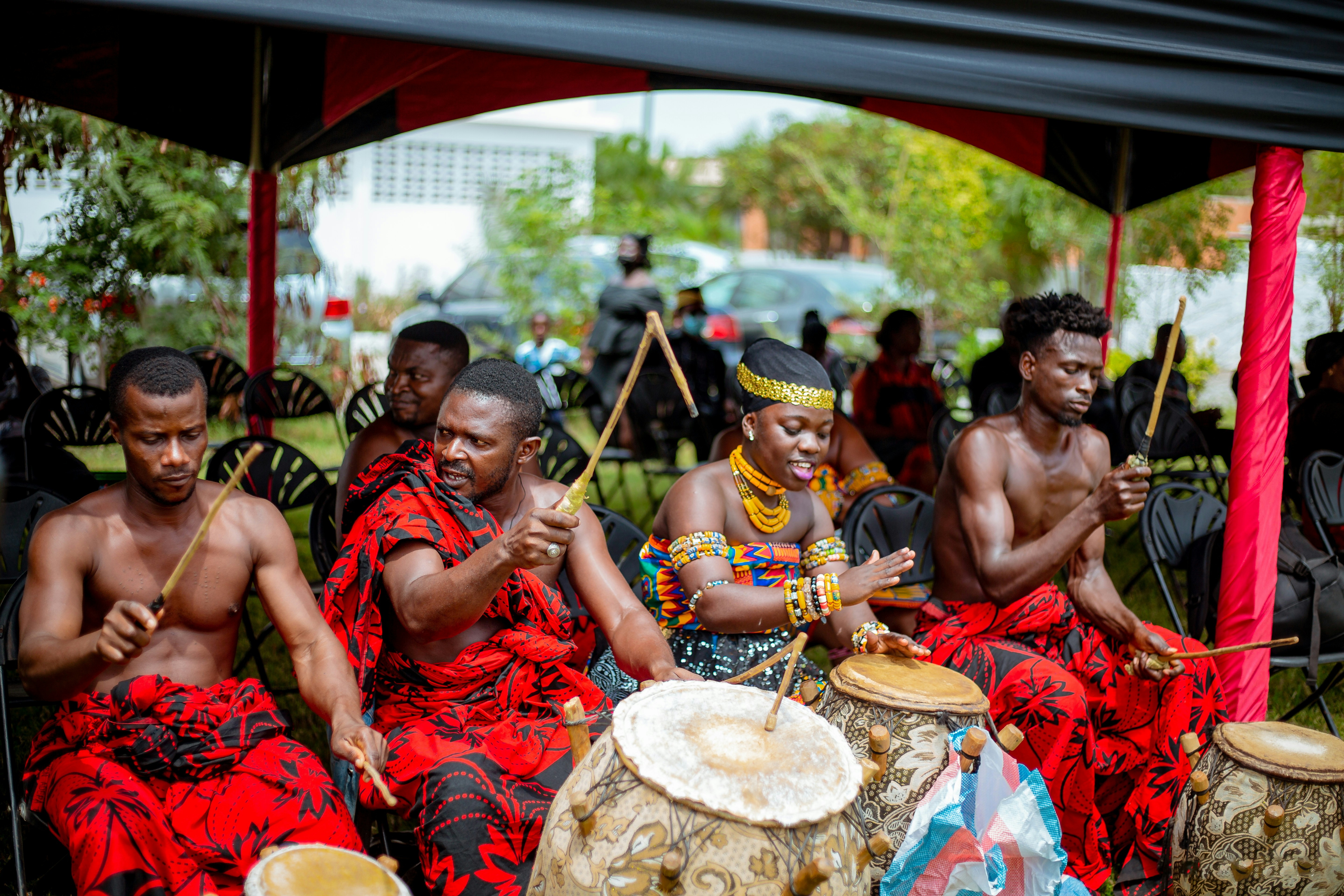
Drums call the spirits home. Red and white cloth flutters in the dusty sun as masked dancers whirl, their footsteps conjuring generations long gone.
Words: Sisanda Kubeka
Dancing With the Dead: Reclaiming Death as Celebration
Drums call the spirits home. Red and white cloth flutters in the dusty sun as masked dancers whirl, their footsteps conjuring generations long gone. These celebrations remind us that death is not silence nor emptiness but movement, colour, and song. That to die is not to disappear – it is to arrive elsewhere, welcomed by those who once welcomed us here.
In many African cultures, funerals are not just farewells. They are vibrant celebrations: rituals of joy and reunions with ancestors. They teach us that grief can be loud, beautiful, and alive with possibility.
Annie Spratt via unsplash
Western grief is often experienced as a linear process: a goodbye, a descent into darkness, a path through pain to eventual closure. African cosmologies tell a different story, though, in a place where time is cyclical – spiralling like shells and galaxies. Death is a transition, not an end, and those who’ve departed do not cease to exist. They remain near, advising and protecting the living and woven into daily life like Kente threads into cloth.
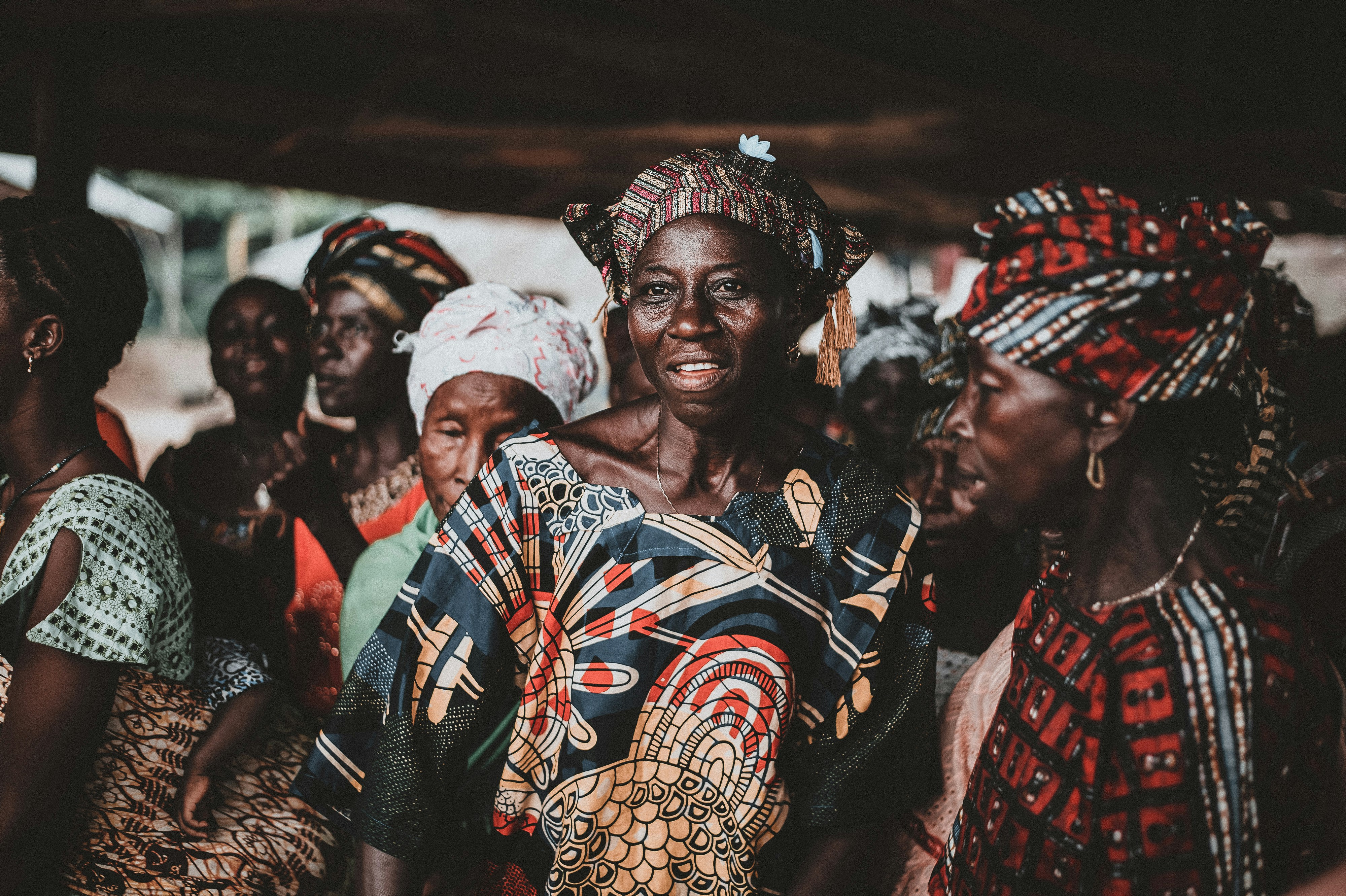
For Africans, grief is often a communal ritual: not a private, feared matter but one where collective mourning enables the soul to find its path home accompanied by the living’s fierce love.
Specific traditions that celebrate the dead include:
At an Egungun festival, ancestral spirits dance among the living. Masked figures clothed in layer upon layer of cloth become walking shrines. As they dance, they bless, protect, and renew the moral life of the community. The air is thick with drumming, praise-singing, and awe. Here, the dead do not haunt. They return to guide and remind us that we are never alone.
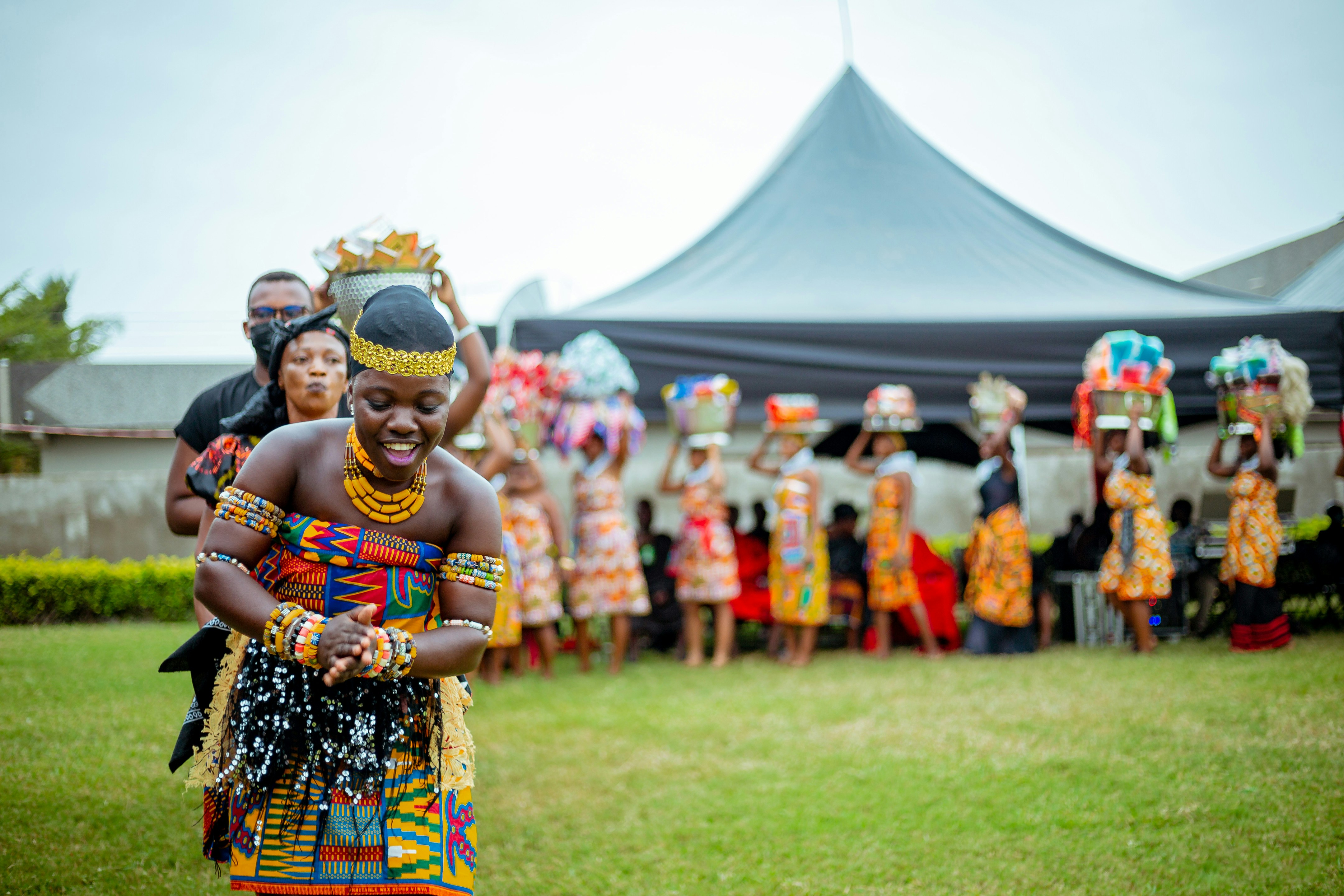
In Ghana, death is crowned with creativity. Coffins are shaped like bibles, cocoa pods, airplanes, fish, and cigarettes: each revealing the deceased’s profession, personality, or dreams. A fisherman is buried in a great silver tilapia. A pilot rests in a carved jet. Not morbid, they’re declarations that say, “This is who I was. Remember me with joy.” Funerals here are parades of storytelling, humour, and beauty, uniting grief with celebration.
Ashanti funerals are not quiet affairs. They are grand, emotionally charged gatherings that honour not just the end of a life, but the enduring presence of the departed within the community. There is music, drumming, dance, and ceremony, each gesture thick with meaning. Death, in this context, doesn’t sever ties; it transforms them. The deceased is ushered into the realm of ancestors, where they are believed to continue guiding the living. It is a reminder that mourning and celebration often share the same space. It is also a reminder that legacy, for the Ashanti, is a living, breathing thing.
Every five to seven years, Malagasy families open their ancestral tombs. They remove the bones, rewrap them in fresh silk cloth, and dance with them to live music. It’s called Famadihana, “The turning of the bones,” and is a festival of love, reunion, and respect. The dead are not forgotten relics; they are family, woven into ongoing life. Children meet ancestors they never knew and learn that to die is only to change form.
These philosophies survived slavery and colonisation across oceans. In Jamaica, Nine Night is a vigil of food, drumming, storytelling, and games that ensures the spirit’s journey is blessed with joy, not fear. In New Orleans, the Second Line transforms funerals into jazz parades. Brass bands lead mourners as everyone dances in the street, dressed to the nines while celebrating life’s beauty and releasing sorrow into communal rhythm.
Ranta via Pexels
Reclaiming Grief as Celebration
I remember the very first funeral I attended. We sang until the walls of the church began to vibrate, the adults stomping the earth in praise and the children watching: learning early on that grief is not a secret to hide but a song to sing together. That death is not darkness but a doorway flooded with the light of those who came before us.
These traditions remind us that grief is communal, not private; joyful, not just sorrowful; sacred, not sterile. They teach us that we can meet death with music and colour and stories and laughter as we carry our dead into tomorrow.
In a world that fears death, these rituals whisper a different truth: that to mourn is to remember that love transcends flesh. The ones we lose remain with us and are woven into every dance, every drumbeat, every prayer we utter in the name of those who built us.
Death, here, is not an end. It’s a celebration of life’s eternal circle.
Enoch Appiah jr via unsplash
Sources:
Zaccheus Onumba Dibiaezue Memorial Libraries, Egungun Festival, 2025