
Across continents and oceans and over centuries of displacement and resilience, food has remained one of the most resilient threads connecting African people to their descendants. From jollof to jerk and gumbo to gari, our flavours carry the essence of migration, adaptation, and memory. Food isn’t just nourishment for Sarabo Cultural Events founder and Pan African Food Festival creator Zoe Sarabo, though, but an act of reclamation, a language of belonging, and a bridge between Africa, the Caribbean, and the Americas. As she says:
“African Food is one element of a community’s cultural identity that serves to define connection, history, custom, and tradition. The process of food preparation, serving, and communal eating plays an integral part of African societies, and without a true appreciation of the food and what it means then we lose a major aspect of African heritage and cultural practice.”
Born in Georgetown, Guyana and now based in Phoenix, Arizona, Sarabo embodies the layered complexity of diasporic identity. Her upbringing in the West Indian tradition – and deep understanding of her African ancestry – shaped her vision of a world where food is not only a taste of home but a map of connection.
“Being born in the West Indian culture as a descendant of enslaved Africans gives me the vantage point to recognise the resilience of diasporic communities and how they were able to maintain traditional practices of our African foreparents,” she explains. “Learning about African cuisines helps me to recognise in what form and what parts of the diaspora they can be found. It tells the story of continuation and legacy that have been sustained over time far from its original home.”
Sarabo’s journey culminating in the Pan African Food Festival began long before its first edition. As a self-identified pan-Africanist, she was motivated by a calling to carve out spaces for reconnection so descendants of Africa could see themselves reflected not in trauma but instead creativity, excellence, and shared joy.
“My purpose is to create spaces and opportunities for Black communities of the African diaspora who come from a lineage of enslaved foreparents to reconnect and reclaim that cultural heritage they were violently stripped of,” she says. “My interest in culture and identity started in college as an African and African-American Studies major. I was blessed to have professors who were beautiful representations of what it means to be African from the continent or the diaspora.”
Following those early college years at Arizona State University, her curiosity evolved into expression – first through fashion and then events. After traveling to Ghana and connecting with local tailors, Sarabo launched her own African-inspired clothing line and began organising fashion events celebrating pan-African aesthetics: her 2019 collaboration on a major African cultural festival in Arizona ultimately laying the foundation for the Pan African Food Festival, her signature creation reflecting a vibrant showcase of cuisine, music, art, and tradition from across the African world.
“Everything I’ve done led me to having a Pan African Food Festival as the next obvious step,” she reflects. “The inspiration came when I was hired to be the host of a pan-African themed restaurant that had opened at the time. I wanted an event that elevated the richness of our cuisines and celebrated the people leading Arizona’s growing food culture.”
When asked to describe African food in a single word, Sarabo doesn’t hesitate: tradition.
“Tradition embodies culture, community, and meaning,” she says. “African people are intentional with everything that is created, and every spice, dish, and flavour connect to a people, a community, and a story – all of which become the tradition and practice of that place.”
For those in the diaspora, that tradition is a compass pointing back to a place they may never have seen but still feel deeply.
“Tradition is important for someone who does not have direct lineage to the continent because it reinforces ties to an unknown cultural heritage. Every meal that is common in the African Diasporan communities with African roots helps us to strengthen our connection and serves as a discovery of an unknown identity.”
Sarabo’s own story mirrors the path of many in the diaspora: a journey of rediscovery and reclamation. Moving from Guyana to the U.S. showed her just how deeply African identity is sown into the fabric of Caribbean culture, even when unspoken.
“I took for granted the extent to which elements of African identity, culture, and values were embedded within the larger West Indian culture,” she admits. “It wasn’t until I moved to Arizona and was removed from the familiarity of culture that I was able to identify the African parts of the Guyanese and, by extension, West Indian culture.”
This same awakening drove the creation of Sarabo Cultural Events, an organisation designed to help others of African descent identify, strengthen, and celebrate the cultural threads connecting them.
“It became a passion of mine to help others identify culture that has been retained while also strengthening those ties with intention,” she says. “The journey to reconnect and reclaim looks different for everyone, but I happened to start with fashion, food, and spirituality. In my book Becoming Authentically African, I call it a process of detoxing or decolonisation – removing and reclaiming.”
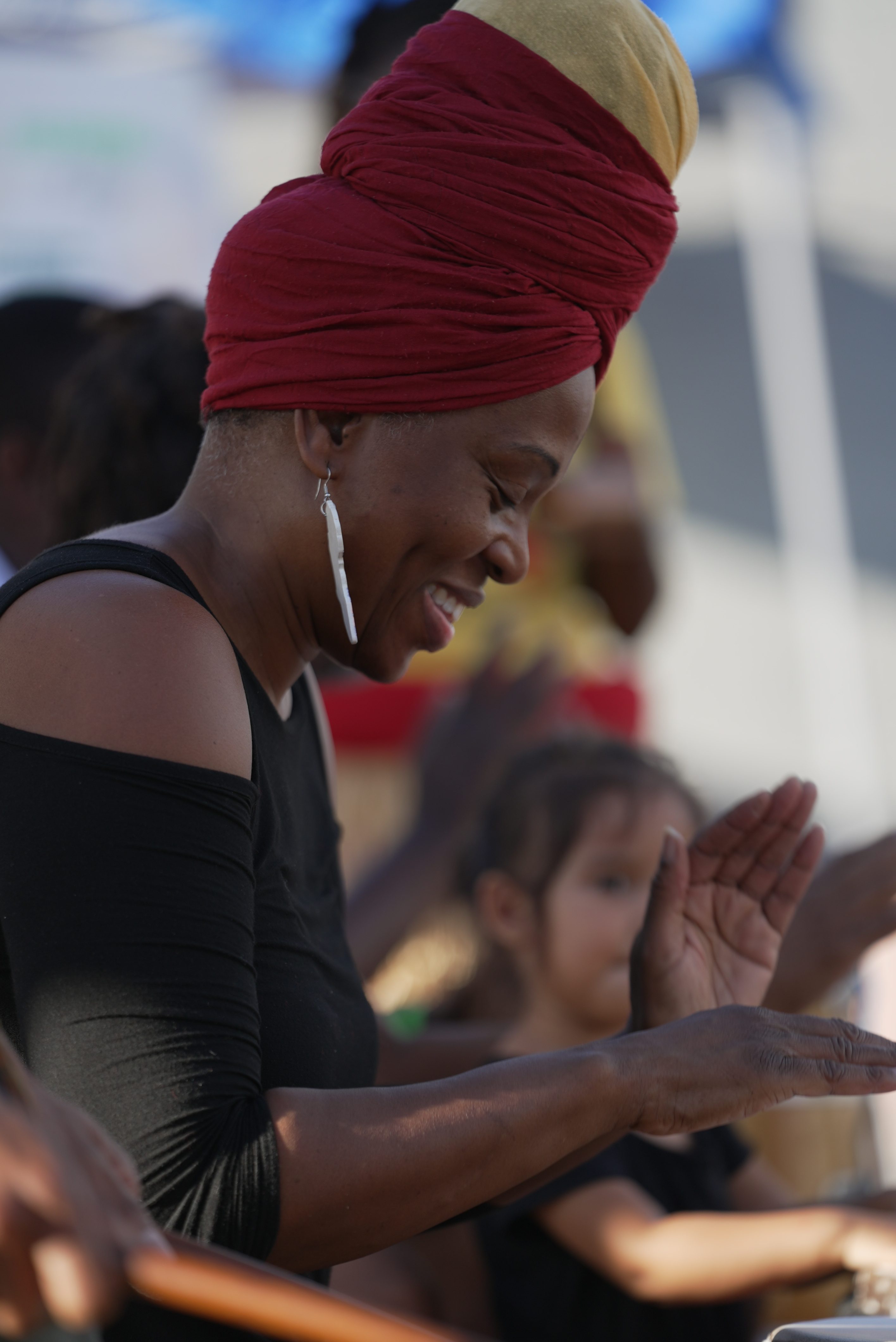
At the Pan African Food Festival, food is only one part of a multisensory experience. Fashion, music, and art converge to create a holistic representation of African identity, one honouring tradition while celebrating innovation.
“While it is a food festival that celebrates diverse cuisines from across the continent, Caribbean, and Southern United States, other elements of culture such as fashion and creative arts are incorporated,” Sarabo explains. “We were intentional with the range of performances selected, ensuring true pan-African representation and that everyone who attended felt recognised.”
Attendees are encouraged to dress in African-inspired clothing, and one of the festival’s most captivating features is the Chief Series Project that invites Black men to experience the regal essence of what it feels like to wear authentic Kente wraps.
“This activity allows Black men to feel power and royal essence when wearing the Chief Wrap,” Sarabo says, smiling. “It’s one of those moments where fashion becomes more than clothing; it becomes a ceremony.”
For Sarabo, the Pan African Food Festival is more than an event as a movement aiming to redefine how African heritage is represented: not as fragmented cultures nor postcolonial remnants but instead a continuum of brilliance.
“Yes, I most certainly do see the Pan African Food Festival as part of a broader movement,” she affirms. “It’s the first step towards elevating African cuisine, creating a culture around food that has African origins while promoting the people who are passionate about the art of cooking and the work they are doing.”
Her vision is expansive and inclusive: a future where food serves as a powerful means for unity and living dialogue between Africa and its far-flung descendants.
“My vision is for food to be used as one avenue towards strengthening ties between the African Diasporic community and continental Africans, creating a food culture that represents the fusion of our stories and experiences.”
When all is said and done, that story always returns to the plate for Sarabo – to the comfort of a meal reminding her of home, family, and heritage.
“I like to say I am a rice eater,” she laughs. “My ideal meal would be the Guyanese version of peas and rice, which we call ‘cook-up’ rice with oxtail. Rice and peas – or beans and rice in some islands – is common across the diaspora. Guyanese cook-up rice is made with coconut milk and spices rather than water. Oxtail, on the other hand, is my favourite meat. When it’s done right, I can consume it every day.”
In Zoe Sarabo’s world, food is more than sustenance; it’s survival, storytelling, and soul. Her Pan African Food Festival is a reminder of what happens when African, Caribbean, and American ancestries gather around one table to ultimately rediscover a shared heartbeat.
Because while history has scattered us, tradition – delicious, defiant, and divine – keeps calling us back home.
Share: